
Rubio Insists Iran Will Not Be Allowed To Charge Tolls In Strait Of Hormuz Under Any Final Deal
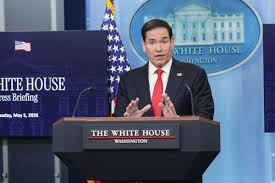
The foreign policy stance of the United States toward the Middle East has intensified following strong statements from top Washington officials regarding ongoing maritime and nuclear negotiations with Tehran. United States Secretary of State Marco Rubio issued a firm declaration regarding the strategic waters of the Persian Gulf, asserting that Iran will absolutely not be allowed to charge tolls or levy transit fees on commercial shipping vessels passing through the Strait of Hormuz under any final diplomatic deal. Washington remains highly committed to preserving the total freedom of navigation through this critical international choke point, where nearly 20% of the global petroleum supply passes daily. The firm stance comes in response to recent rhetoric from hardline factions within the Iranian establishment who have floated the idea of extracting financial transit costs from foreign vessels as a countermeasure against crippling western economic sanctions.
Simultaneously, United States President Donald Trump has added another layer of complexity to the fast moving diplomatic situation by publicly insisting that Iran has already conceded to major international demands. Donald Trump stated that Tehran has officially agreed to grant United Nations inspectors from the International Atomic Energy Agency immediate, unfettered access to all its contested nuclear sites and underground research laboratories. This public assertion by the American President stands in sharp and direct contradiction to official statements coming out of the Iranian capital, where top diplomats and atomic energy officials have repeatedly and explicitly denied making any such structural concessions. The sharp divergence in public messaging reveals a massive gap in expectations between the two negotiating teams, raising immediate doubts about the underlying stability of the secret backchannel communications currently taking place.
The diplomatic standoff is further complicated by a defiant defensive posture adopted by the political leadership in Tehran, driven by deep regional security concerns. Iranian President Masoud Pezeshkian strongly defended the ballistic missile program of his nation during a public address, delivering a stark warning about the consequences of unilateral disarmament. The Iranian president argued that without its robust missile defense network, his country would find itself completely defenseless against foreign military intervention, stating that Iran would end up just like Gaza if it abandoned its primary deterrent capabilities. This intense rhetoric underscores the deep seated fear within the Iranian state apparatus regarding external regime change threats, making the total elimination of their long range missile stockpile a non negotiable point in any upcoming multilateral discussions.
This diplomatic friction highlights a deep strategic challenge where both nations appear to be projecting maximum strength for domestic political audiences while attempting to establish leverage at the negotiating table. The insistence by Marco Rubio on protecting maritime shipping lanes reveals that Washington is unwilling to accept any deal that compromises global energy security or allows Tehran to normalize its influence over international trade routes. However, the flat refusal of Iran to halt its missile production or validate the inspection claims made by Donald Trump indicates that a comprehensive diplomatic breakthrough remains highly elusive. For any future treaty to hold, negotiators will have to bridge these absolute contradictions in security priorities. Without a verifiable, mutually accepted framework for nuclear tracking and regional defense limits, the current talks risk collapsing into a deeper cycle of economic blockades and military posturing in the Persian Gulf.