
Special Executive Magistrate Police Powers Under Fire Amid CJP Arrests and Gyanesh Kumar Election Fraud Allegations
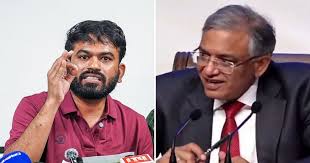
Imagine a high-stakes match where the referee is actively wearing the jersey of one of the competing teams. That scenario sounds fundamentally unfair, yet a virtually identical dynamic operates within Indian preventive law enforcement. Under specific legal provisions, senior police officers are routinely designated as Special Executive Magistrates (SEMs). Armed with these powers, police officers hold the authority to demand peace bonds, reject sureties, and send citizens straight to jail—effectively collapsing the boundary between investigator, prosecutor, and judge.
This controversial concentration of authority has returned to national headlines following the detention of Citizens for Justice and Peace (CJP) leaders Saurav Das and Ashutosh Ranka in New Delhi.
The leaders were participating in demonstrations tied to grave allegations against Chief Election Commissioner Gyanesh Kumar, centered on alleged voter list manipulation, sudden electoral roll revisions, and broader electoral fraud controversies. After attempting to demonstrate at Jantar Mantar, Das and Ranka were rounded up by Delhi Police under preventive provisions. Instead of having their fundamental liberty adjudicated promptly before an independent judicial magistrate from the regular court system, they were produced directly before a Delhi Police Assistant Commissioner of Police (ACP) acting in the dual capacity of an SEM.
Under Sections 126, 130, and 170 of the Bharatiya Nagarik Suraksha Sanhita (BNSS)—which replaced corresponding preventive sections of the colonial-era Code of Criminal Procedure (CrPC)—Executive Magistrates wield vast discretionary clout. They can demand show-cause bonds and order remand to preempt an anticipated "breach of peace". In metropolitan setups where police officers serve as SEMs, this statutory framework generates an undeniable structural conflict:
* The Detaining Authority: The police force detains political activists, protesters, or dissidents for unauthorized gatherings.
* The Adjudicating Authority: An active officer from that exact same police hierarchy sits on the bench as an SEM, decides the legitimacy of the police’s own remand request, scrutinizes bail conditions, and signs jail orders.
During the remand of the CJP leaders, defense lawyers raised fierce objections over rejected surety bonds, repeated custody extensions, and prolonged pre-trial detention, openly characterizing the venue as an unaccountable "police court" stripped of judicial detachment.
This is not the first time police magisterial authority has provoked alarm. Across decades, constitutional courts—including the Delhi, Madras, and Rajasthan High Courts—as well as the Law Commission of India have repeatedly warned that handing judicial powers to uniformed police erodes personal liberty guaranteed under Article 21. Scholars emphasize that when police act as magistrates, it directly violates the constitutional doctrine of the separation of powers, removing the critical check on executive overreach.
While administrative bodies defend SEM police powers as necessary for maintaining rapid crowd control and preventing public disorder, civil liberties advocates argue they function as a colonial-era shortcut to bypass due process and muzzle dissent. The detention of CJP leaders amid public outrage over electoral integrity demonstrates that when the badge of a police officer and the gavel of a magistrate belong to the same hand, fundamental rights hang in a precarious balance.