
'Stop Vote Chori' Reaches London: Indian Students Rally at Parliament Square Against CEC Gyanesh Kumar as Modi Government Backers Stage Counter-Demonstration
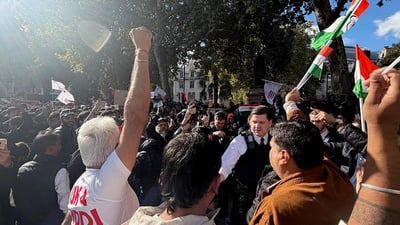
The confrontation over the integrity of India's electoral apparatus spilled onto the international stage as Indian student organizations, diaspora members, and civic activists gathered at Parliament Square in London to demonstrate against Chief Election Commissioner (CEC) Gyanesh Kumar and the controversial Special Intensive Revision (SIR) exercise. Organizing under the banner of the "Stop Vote Chori" campaign, demonstrators assembled directly opposite the iconic statue of Mahatma Gandhi, voicing alarm over large-scale voter deletions and administrative stonewalling by the Election Commission of India (ECI).
The demonstration featured popular political commentator and YouTuber Dhruv Rathee as keynote speaker. Addressing the crowd in Hindi, Rathee emphasized that concerns regarding voter suppression and non-transparent deletions under the SIR process cannot be treated as a routine domestic disagreement, arguing that safeguarding democratic institutions requires diaspora mobilization. Protesters displayed placards accusing the poll panel of subverting constitutional safeguards, demanding public audits of revised electoral rolls and the immediate resignation of the top election officer.
The rally encountered resistance from a smaller group of counter-demonstrators representing overseas government loyalists. Assembled on the opposite side of the square, the counter-protesters raised slogans of "Modi, Modi" and waved flags to drown out speeches condemning the election machinery. The face-off grew tense as both factions traded chants across the plaza, requiring officers from London's Metropolitan Police to form protective cordons to keep the two gatherings separated and prevent physical escalation.
The overseas standoff underscores how domestic unrest surrounding electoral accountability has breached national borders. While the poll body has officially characterized the SIR as an administrative exercise to clean rolls of ineligible voters, critics argue that the reliance on police crackdowns at home and reflexive counter-protests abroad reflects an administration defensive over systemic irregularities. By projecting the debate onto prominent global platforms, student groups are ensuring that questions concerning voter deletions and constitutional erosion remain impossible to suppress behind state-level barricades.