
Weaponizing Immigration Laws Against Dissent: Actor Imran Khan Moves Bombay High Court as State Deploys 'Leave India' Notice Over Anti-CEC Protest
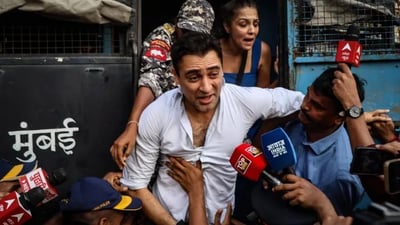
Actor Imran Khan has moved the Bombay High Court to challenge a draconian "Leave India" notice served by the Mumbai Foreigners Regional Registration Office (FRRO), which ordered him to depart the country by October 28 or face criminal prosecution. The summary directive was slapped on the 43-year-old actor following his brief presence at an October 10 demonstration at Mumbai's historic August Kranti Maidan, where citizens assembled to demand the resignation of Chief Election Commissioner (CEC) Gyanesh Kumar over massive voter deletions and institutional irregularities.
In his petition, filed through advocates Zulfiquar Memon, Parvez Memon, and Chirag Naik, Khan has sought an urgent stay and quashing of the order, calling it manifestly arbitrary, unconstitutional, and contrary to natural justice. The plea emphasizes that the FRRO issued the deportation deadline with extraordinary haste—barely days after a complaint was lodged by BJP leader Kirit Somaiya—without disclosing any specific statutory contravention, without furnishing underlying material, and without offering him a show-cause notice or a hearing.
The notice treats Khan strictly as an alien US citizen subject to summary removal under the Immigration and Foreigners Act, completely erasing his lifelong residency and status as an Overseas Citizen of India (OCI) cardholder. As his plea points out, Khan has lived in India since the age of two, built his life, family, and cinema career in the country, and attended the August Kranti Maidan gathering purely as a concerned resident of Mumbai rather than a representative of any political front. The petition stresses that August Kranti Maidan was neither a restricted area nor an off-limits installation, and that video footage demonstrates he neither breached police barricades nor engaged in disruptive conduct.
The immediate deployment of state deportation powers against a prominent cultural figure highlights a disturbing escalation in suppressing civic expression. While administrative rules impose restrictions on foreign nationals participating in partisan political campaigns, using national security and foreign-registration provisions to uproot a lifelong resident over peaceful assembly distorts the statutory purpose of immigration control. Critics and legal scholars observe that the administration has created an environment where demanding constitutional transparency from the Election Commission is treated as an existential violation of law.
By reducing the statutory guarantees of OCI holders to a dead letter overnight, the executive has signaled that residency and civil standing remain conditional on complete political silence. The Bombay High Court's scheduled examination of the notice will test whether administrative agencies can deploy immigration mechanisms as punitive instruments of political intimidation, or whether fundamental procedural justice continues to restrain arbitrary state action.