
Supreme Court rules Election Commission holds no monopoly over voter awareness drives
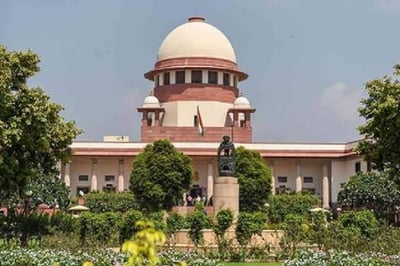
The highest court of the country has delivered a landmark ruling protecting the basic democratic right of ordinary citizens, community groups, and independent volunteers to educate people about voting. In a clear and decisive courtroom observation, the top bench declared that constitutional election bodies do not possess an exclusive monopoly over voter education and public awareness campaigns. The decision confirms that non governmental organizations, university youth clubs, residential associations, and civil society platforms have complete freedom to teach people how to vote, explain candidate backgrounds, and encourage neighbors to reach polling booths on election day.
The legal matter reached the top bench after local election officers in several districts started stopping independent awareness drives, claiming that only registered state officers have legal permission to run voting campaigns. Officials had issued notices demanding prior permission, attempting to seize posters and leaflets distributed by citizen groups trying to improve low turnout numbers in urban neighborhoods. The case was heard by a division bench comprising Justice Joymalya Bagchi, who noted that raising civic awareness is a fundamental community service that helps the entire democratic framework grow stronger.
Addressing the legal counsel appearing for election authorities, Justice Bagchi made it clear that state power has well defined legal boundaries. The judge observed that while the Election Commission has full statutory authority to investigate, penalize, and stop anyone involved in corrupt practices, bribery, or unlawful voter influence, it cannot take complete control over voter awareness exercises. The court emphasized that spreading civic knowledge and encouraging people to vote without taking political sides is a basic expression of free speech that helps empower common voters across rural and urban India.
Lawyers representing civil society groups told the court that excessive official control had started to strangle healthy public participation during election season. In many smaller towns, local volunteers wanting to set up help desks, distribute voter registration forms, or organize street plays faced harassment from ground level administration squads. The petitioners argued that if every simple civic effort requires complicated government permits and police approvals, ordinary people will simply stop helping, leading to lower voter participation and weaker public engagement with democratic choices.
The bench agreed with the core argument, pointing out that informed voters are the real foundation of any genuine democracy. When citizen groups explain voting procedures, teach first time voters how electronic machines work, or remind people to check their names on the voter list, they perform a constructive national duty. The judges stated that treating harmless awareness drives with suspicion hurts the electoral process instead of protecting it. The bench made a clear distinction between illegal electoral misconduct and healthy, neutral civic outreach designed to increase participation.
The ruling has brought immense relief to thousands of volunteer groups, student organizations, and democracy platforms across the country. In recent years, independent fact checking forums and youth networks have worked hard to fight fake news, counter online rumors, and explain candidate assets and criminal track records to ordinary voters in simple language. The verdict guarantees that local administrations cannot use red tape or police threats to silence neutral groups who merely want citizens to exercise their voting rights wisely.
Legal experts have hailed the observation of the court as a timely defense of citizen action within the constitutional framework. Under the Indian Constitution, the right to freedom of speech and expression covers the freedom to receive and share public information. When volunteers inform their neighbors about polling dates, booth locations, and the importance of voting, they are acting entirely within their constitutional rights. Legal scholars noted that the ruling reminds public officials that they are public servants tasked with facilitating elections, not gatekeepers who own the democratic process.
The judgment also provides clear instructions on where election officers must focus their energy. Instead of monitoring harmless college debates, distribution of simple informational brochures, or community voter marches, enforcement squads should actively track illegal cash distribution, illicit liquor flows, hate speech, and attempts to intimidate poor voters in sensitive booths. The bench reiterated that regulatory power is meant to catch criminals and corrupt actors, not to crush civic enthusiasm.
The stand taken by the Supreme Court sends an unmistakable signal across all states and union territories. It affirms that democracy does not belong exclusively to political parties or government machinery, but to every individual citizen who chooses to participate in public life. By protecting the space for community voter drives, the judiciary has ensured that the task of strengthening democratic awareness remains a shared responsibility belonging to the entire society.