
Tata Motors Ordered To Give Free Harrier Replacement Or Refund 21.4 Lakh Rupees To Premium SUV Owner
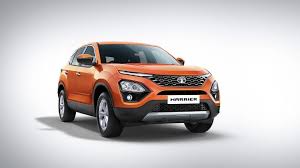
The consumer dispute resolution landscape in India recently witnessed a historic ruling that underscores the critical importance of corporate accountability and vehicle safety standards in the passenger vehicle industry. The District Consumer Disputes Redressal Commission in Kangra Himachal Pradesh issued a groundbreaking directive against Tata Motors and its authorized regional dealership JKR Motors Private Limited. The legal body ordered the major automobile manufacturer to either completely replace a defective Tata Harrier XZA plus Dark Edition SUV or provide a comprehensive financial refund amounting to 2140775 rupees. This decisive ruling emerged after a prominent regional resident Dr Krishan Lal Kapoor approached the consumer court following severe mechanical stress that turned a high premium vehicle ownership experience into a highly dangerous ordeal. The legal case highlights the rising willingness of Indian car buyers to challenge industrial manufacturing standards when multi million rupee investments fail to meet basic structural integrity parameters.
According to the official judicial filings the vehicle was originally purchased in May 2022 and quickly began displaying persistent operational irregularities that raised serious safety concerns for the occupants. Within covering the initial 1000 kilometers the flagship sport utility vehicle began producing unnatural knocking sounds alongside heavy continuous vibrations across the power steering setup. Although the authorized service workshop initially swapped out the entire power steering assembly under standard warranty protocols the dangerous steering defects resurfaced at high cruising speeds. The technical situation deteriorated drastically when the vehicle suffered 2 successive timing belt structural snaps before reaching its 27000 kilometers operational milestone. The first mechanical snap occurred in August 2023 on the Hamirpur Sujanpur highway leaving the owner and his young family stranded without cover for over 6 hours before emergency roadside assistance managed to tow the premium vehicle away.
The legal battle escalated significantly when an independent mechanical engineer and automobile expert named Gaurav Singh submitted a thorough technical evaluation report directly to the judicial bench. The expert documentation clarified that standard timing belts are highly durable engine components structurally engineered to survive between 90000 and 100000 kilometers under regular operating environments. The technical investigation discovered a severe physical misalignment of the factory timing bracket assembly which consistently forced premature component degradation and sudden catastrophic engine shutdowns. Tata Motors legal representatives attempted to counter the structural claims by asserting that the vehicle had successfully traversed 30000 kilometers and that component wear can vary based on individual driving styles. However the consumer commission firmly rejected the defense of the automaker noting that no equivalent scientific evidence or technical counter reports were provided to challenge the independent engineering assessment.
The judicial panel consisting of president Hemanshu Mishra along with members Arti Sood and Narayan Thakur declared that a paying consumer cannot be legally forced to utilize a structurally defective and potentially life threatening asset. The commission emphasized that repetitive component failures on major transport corridors pose an extreme risk to human life thereby validating the demands for comprehensive financial restitution. Alongside the core choice of an updated replacement vehicle or full price refund the court added a 9 percent annual interest fine calculated from the initial date of legal filing. To provide extensive moral relief to the impacted consumer the manufacturer must pay an additional 100000 rupees as direct compensation for mental agony and 15000 rupees to cover standard litigation fees. This major judgment establishes a solid consumer protection benchmark indicating that premium product pricing must be backed by absolute mechanical reliability and strict manufacturing quality assurance protocols.