
Trump Signs Russia Sanctions Law Authorizing 100 Percent Tariffs As Oil Inflation Challenges Enforcement
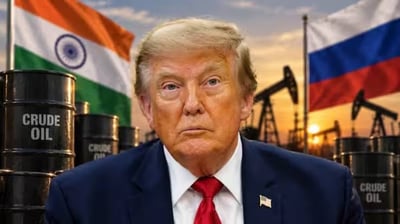
United States President Donald Trump has signed into law a major sanctions act granting the executive branch authority to impose tariffs of up to 100 percent on foreign nations purchasing large volumes of Russian energy. The bipartisan measure, titled the Lindsey O. Graham Sanctioning Russia and Iran Act, targets the primary financial lifelines that fund Moscow military operations. By expanding secondary trade penalties to target major energy importers, the law places prominent buyers like India and China directly into the geopolitical line of fire.
The congressional legislation establishes a thirty-day review window directing the White House to evaluate penalties on the five largest global purchasers of Russian crude oil and natural gas. Rather than automatically triggering punitive duties at the border, the statutory framework functions as an executive enforcement tool. It gives the American president significant legal flexibility to decide which countries face duties, what exact percentages apply, or whether national security waivers should be issued. This design grants Washington substantial trade leverage heading into high-level diplomatic meetings with foreign counterparts.
For New Delhi, the secondary tariff risk carries substantial economic importance. India imports more than 85 percent of its crude oil requirements to meet domestic consumption demands, with Russian barrels accounting for nearly half of those inbound shipments over recent months. Following Western sanctions in early 2022, Indian public and private refiners bought discounted Russian Urals crude, displacing traditional Gulf suppliers. The Ministry of External Affairs responded to the legislative development by affirming that India remains firmly committed to safeguarding energy security for its 1.4 billion citizens through diversified sourcing.
China represents the other primary buyer targeted by the secondary sanctions mechanism. Chinese state refiners and independent processors purchase large quantities of seaborne and pipeline crude from eastern Russian ports. Chinese trade officials have routinely condemned unilateral American economic penalties as unlawful extraterritorial jurisdiction. The timing of the bill provides the American administration with a direct pressure point ahead of scheduled bilateral talks with Beijing leadership, even as both capitals prepare discussions on trade balances and critical supply chains.
Despite the broad authority granted by Congress, global energy market fundamentals present serious obstacles to aggressive enforcement. If Washington were to detonate secondary duties and push hundreds of millions of barrels of Russian oil completely out of circulation, the sudden withdrawal of crude supplies would trigger sharp price spikes across international oil benchmarks. Energy economists warn that removing Russian energy flows during periods of tight spare production capacity risks driving global crude benchmarks past 100 dollars per barrel, accelerating worldwide transport and manufacturing costs.
This economic dynamic creates a sharp dilemma for domestic policy in the United States. President Trump political base remains sensitive to retail gasoline prices, transport costs, and grocery inflation ahead of the November midterm elections. A sharp jump in consumer fuel prices caused by secondary energy sanctions could undermine domestic economic agendas. Consequently, energy analysts expect the administration to use the 100 percent tariff power primarily as a negotiating threat rather than an immediate, across-the-board economic weapon.
Trade specialists also note that Washington views India as an essential strategic and security counterweight in the Indo-Pacific theater. Imposing sudden 100 percent punitive duties on Indian pharmaceuticals, engineering goods, and textile exports would disrupt bilateral trade relations and risk driving New Delhi deeper into alternative non-dollar trade settlement mechanisms. Washington trade officials are far more likely to pursue structured compromises, such as encouraging Indian refiners to gradually diversify import contracts toward American, African, or South American crude grades.
The legislation marks an expansion in congressionally delegated tariff authority, giving the executive branch its most potent secondary trade sanction tool in decades. However, whether the White House uses the maximum penalties or relies on diplomatic waivers will ultimately depend on delicate balance points. Preventing supply shocks in global energy markets and containing domestic retail inflation may force the administration to temper its public threats with practical economic restraint.