
UPI Payment Charge Row Escalates As Fuel Pumps Stop Digital Billing Over Modi Policy Favoring Trump And Visa
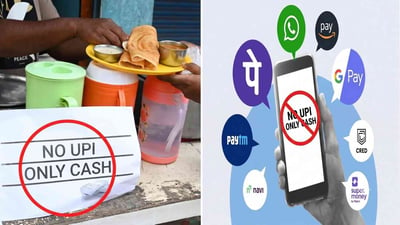
Petrol pump owners across Madhya Pradesh have officially resolved to stop accepting Unified Payments Interface payments above two thousand rupees. Motorists buying petrol or diesel worth more than that specific threshold will now have to pay strictly in cash. The collective step, taken by the state petrol pump association representing around four thousand seven hundred fuel outlets, marks the first major commercial pushback against recent digital payment policy updates. Retail fuel operators maintain that continuing open digital collections for higher amounts has become economically unviable due to thin profit margins.
The main trigger behind this widespread dealer resistance is the introduction of a zero point four percent merchant discount rate on merchant digital payments above two thousand rupees. Fuel pump operators work on extremely narrow, fixed commissions per litre set by oil marketing companies. When an outlet accepts large digital payments, deducting merchant charges cuts straight into the dealer margin. Station owners explain that they already bear card transaction costs on point of sale machines. Adding an extra cut on popular phone based scanning services threatens to turn everyday retail business into an outright financial loss.
Rather than going on an aggressive strike or shutting down dispensing machines, fuel dealers have chosen to protect their books by restricting digital acceptance thresholds. Smaller vehicle users filling two wheelers or small fuel quantities will continue using digital scanners without trouble. However, car owners, commercial taxi drivers, truck operators, and farmers purchasing bulk diesel for agricultural machinery will face direct disruption. For years, digital qr codes replaced physical paper money across rural and semi urban highways, and forcing consumers back to cash points will inevitably create long queues at local automated teller machines.
The commercial revolt at petrol pumps quickly ignited fierce political debate at the national level. Opposition leaders have launched a sharp campaign against the Union government, terming the merchant discount rate a disguised tax on everyday commerce. Leader of the opposition Rahul Gandhi directly accused the administration of kneeling before foreign trade interests and sacrificing a homegrown public payment system. He demanded an immediate withdrawal of the transaction cut, stating that ordinary working citizens and traders are being burdened to serve external economic pressures.
A central point in the opposition argument involves international payment giants like Visa and Mastercard. For years, India ran a zero fee regime on its public digital network, which allowed domestic digital transactions to boom while leaving global card networks struggling to capture market share in retail point of sale billing. American trade representatives repeatedly lodged objections against zero fees, claiming the policy created unfair competition for foreign card networks. Critics argue that by forcing an extra merchant charge on larger payments, the government is deliberately dismantling the price advantage of domestic digital transactions, thereby handing a competitive edge back to global multinational card corporations.
The ruling administration has strongly defended the policy revision, presenting it as a necessary measure to keep the banking and server infrastructure sustainable over the long term. Government spokespersons insist that individual customers are completely untouched because person to person transfers and merchant bills under two thousand rupees remain entirely free. According to official estimates, high value transactions represent only a tiny fraction of total payment volume, even though they represent a larger share of total value. Officials maintain that payment apps and participating banks require recurring capital to maintain cybersecurity and server stability.
Yet economic commentators and small trade bodies find the official defense hard to accept. In highly competitive retail sectors, any transaction fee levied on the shopkeeper eventually gets transferred down the chain. Either retailers build the extra fee into higher consumer prices, or they simply refuse digital payments altogether, just as the fuel stations in Madhya Pradesh have done. The claim that the consumer remains unaffected falls flat when dealers refuse to scan phone codes, compelling the customer to locate cash or pay extra surcharges.
A major side effect of limiting digital transactions is the inevitable resurgence of hard paper cash across local marketplaces. The digital transaction revolution previously helped bring informal economic activity into formal bank accounts, curbing unrecorded cash movements. When fuel stations, wholesale markets, and neighborhood merchants reject digital payments to save their small margins, immense volumes of physical currency are forced back into daily trade. Analysts caution that reviving cash heavy transactions naturally increases the flow of unaccounted paper money, creating fertile ground for parallel trading, tax avoidance, and black market cash circulation.
The massive circulation of physical cash also carries serious political consequences, especially around election cycles. Political opponents and social commentators note that widespread cash usage makes campaign expenditure tracking significantly harder. When paper money flows freely without digital records, it becomes far simpler for political machinery to distribute undeclared cash to influence voters during key elections. By squeezing digital payment acceptance at high volume trade hubs, the policy unintentionally enables deep liquid cash reserves across local markets, raising uncomfortable questions about governance priorities and electoral transparency.
The fuel dealers association has urged the petroleum ministry and state authorities to grant petrol pumps an explicit exemption from merchant charges on high value digital payments, similar to card fee protections granted in previous years. Unless the central administration reconsiders the transaction fee structure or offers clear margin relief to low commission retailers, more trade sectors and merchant unions across other states are expected to adopt similar restrictions, putting India celebrated paperless payment system at a critical crossroads.