
US Seeks AI Dialogue With China As Officials Prepare Ground For Trump And Xi Summit
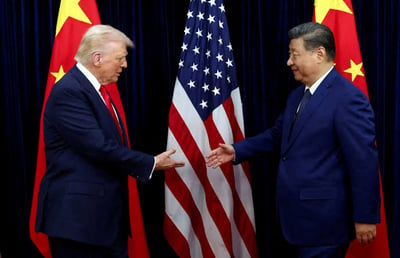
The United States and China have initiated discussions to set up a dedicated communication system on artificial intelligence risks, trying to create safeguards even as the two superpowers compete fiercely for global technology dominance. Senior officials from Washington and Beijing spent nearly eight hours negotiating in New York to narrow their differences and prepare the agenda for an upcoming high level summit between United States President Donald Trump and Chinese President Xi Jinping. The rare push for cooperation comes as global experts and policymakers voice growing alarm that advanced artificial intelligence systems, if left completely unchecked, could spiral beyond human control and cause existential harm to humanity.
The negotiations took place at the Manhattan headquarters of JPMorgan Chase, bringing together high ranking economic and trade leaders from both governments. The American side was led by Treasury Secretary Scott Bessent and United States Trade Representative Jamieson Greer, while the Chinese delegation was headed by Vice Premier He Lifeng and senior trade negotiator Li Chenggang. The marathon meeting served as a crucial preparatory step before the planned bilateral summit between President Trump and President Xi at the White House. Negotiators worked to craft concrete options so the two world leaders could make clear choices on trade agreements and technology guardrails.
At the heart of the New York discussions was a specific American proposal to establish an official bilateral channel called the artificial intelligence dialogue. Under this framework, both nations would set up a rapid notification mechanism to warn each other if an artificial intelligence system triggers a serious national security incident. With computer models growing increasingly capable and complex every month, leaders in Washington want to avoid dangerous misunderstandings or sudden computer driven crises that could unintentionally spark military or economic conflict.
The technology talks also tackled differences surrounding open and closed computer models. Open systems allow programmers across the globe to inspect and modify underlying code, whereas closed systems keep core software private inside company walls. United States officials acknowledged that while they want to maintain leadership in technological innovation, they also recognize the necessity of setting common safety boundaries to stop powerful automated systems from falling into the hands of dangerous rogue groups. After the meeting, Chinese state media confirmed the discussions, describing the exchanges as candid and constructive while noting that both sides reviewed earlier agreements and explored artificial intelligence governance.
Beyond cutting edge software, the delegations spent significant time addressing long running trade and tariff arguments. The two countries are operating under a temporary tariff agreement that approaches expiration in November. Negotiators explored whether they could lower duties on mutually agreed non sensitive consumer goods, farm produce, and industrial supplies. Finding common ground on everyday trade would provide immediate relief to businesses and shoppers in both nations, showing that practical economic cooperation remains possible despite political rivalry.
Securing critical industrial materials was another top priority on the negotiating table. The United States wants firm guarantees on regular shipments of rare earth minerals and specialized magnets, which are essential for building electric vehicles, consumer electronics, and defense equipment. Because China controls a dominant share of global rare earth processing, any sudden export restriction creates massive supply disruptions for American factories. In exchange, American officials reviewed past Chinese commitments to purchase American agricultural products and commercial aircraft.
The talks also touched upon wider geopolitical tensions, including international energy commerce and trade restrictions. With Washington applying heavy economic sanctions on oil exporting nations, Beijing status as a major international energy buyer remains a sensitive topic of discussion. While lower level diplomats and technical teams plan to hold follow up sessions to finalize details, both delegations expressed hope that practical working channels will keep communications open.
The meeting between Treasury Secretary Bessent and Vice Premier He Lifeng indicates that both global giants want to stabilize relations before their presidents sit down together. While the race to build superior supercomputers and semiconductors will continue to drive intense commercial competition, the move to install an artificial intelligence emergency alert system shows that neither side wants uncontrolled technological risks to threaten the safety of our shared world.