
Two School Students and Driver Killed After Train Collides With School Van at Unmanned Crossing in Murshidabad West Bengal
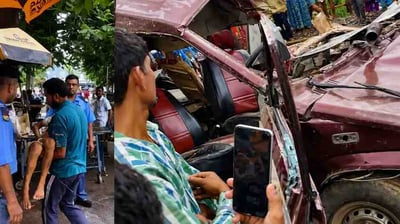
A devastating accident occurred in the Murshidabad district of West Bengal on the morning of July 17, 2026, when a fast moving passenger train rammed into a private school van. The horrific collision took place around 8:45 AM at an unmanned railway crossing located between the Khagraghat Road and Azimganj stations. According to local police reports, the van was carrying 12 young students to a nearby elementary school when the driver attempted to cross the tracks despite low morning visibility. The oncoming engine struck the vehicle with immense force, dragging it for nearly 50 meters along the tracks before coming to a complete halt. Emergency rescue teams and local residents rushed to the spot immediately, shifting the victims to the Murshidabad Medical College and Hospital, where two students aged 7 and 9 years, along with the 38 year old driver, were declared dead on arrival by the emergency medical doctors.
The tragic incident quickly triggered intense anger and grief among the local community, highlighting the ongoing dangers associated with unmanned infrastructure. Hundreds of furious residents gathered at the accident site, blocking the main railway line for over 3 hours and disrupting local train movements across the subdivision. Agitating villagers raised slogans against eastern railway authorities, claiming that repeated written requests for a manual gate or a permanent security guard at this specific crossing had been completely ignored for the past 2 years. Local law enforcement officials deployed a heavy contingent of police personnel to control the emotional crowd and assure the grieving families of a comprehensive investigation into structural lapses. While the railway administration announced an immediate financial compensation package of 5 lakh rupees for the families of the deceased individuals, the emotional scars left on the small rural community remain deep.
This heart wrenching event highlights a critical gap in rural school transportation protocols and railway infrastructure management. While the central government has claimed a massive reduction in unmanned level crossings across its broad network, several rural sectors still feature these high risk transit spots where visibility remains poor during early morning hours. Furthermore, the incident reveals a complete lack of background checks and safety training for private school transport operators in rural pockets, where vehicles are routinely packed beyond safe capacities. Eastern railway officials maintained that the train driver had blown the horn repeatedly while approaching the crossing, shifting the primary operational blame onto the van driver for trying to cross the tracks in a rush. However, public safety experts argue that relying solely on vehicle drivers to avoid accidents at busy rural intersections without physical barriers is an outdated approach that will continue to cause preventable deaths.
Senior state administrative officials confirmed that the 10 injured students are currently receiving intensive medical treatment, with 3 individuals remaining in critical condition inside the pediatric intensive care unit. The state education department has issued a strict directive to all regional school boards, ordering an immediate inspection of all private transport vehicles and demanding that school authorities strictly monitor the routes taken by daily commuting vans. Investigators are also examining whether the local school administration had dynamic oversight of the safety routines followed by their outsourced transport providers. As the railway police officially register a case of negligence, the tragic loss of these young lives stands as a grim reminder that infrastructure expansion must be matched with strict local safety measures to protect the most vulnerable members of society.