
Ukraine Drone Campaign Blocks Russian Sea Access Triggering Massive Chokepoint Crisis
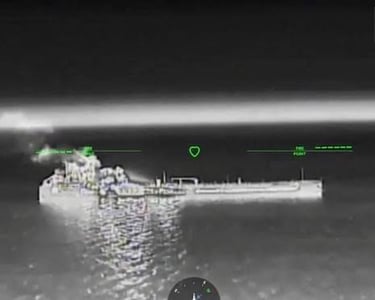
A major shift in maritime warfare has brought a massive economic crisis straight to the doorstep of the Russian federation. In a stunning military development confirmed on Wednesday, 15 July 2026, Ukrainian drone forces successfully executed an intense campaign that targeted 116 Russian commercial and logistics vessels within a brief 9 day window. Led by the specialized Unmanned Systems Forces, the relentless wave of explosive aerial and naval drones systematically hunted down transport ships across the vital waterways of the Azov Sea. The ferocity of these continuous hits left the Kremlin with no choice but to officially order the indefinite suspension of all commercial traffic through the region. Authorities completely blocked the two main strategic chokepoints of the sea, which are the Don-Azov Channel connecting to inland Russian rivers and the critical Kerch Strait linking out to the Black Sea. This sudden total closure has effectively transformed what used to be a safe internal gateway for Moscow into an impassable security trap.
The sudden operational paralysis resembles the classic global economic vulnerabilities typically observed during Middle Eastern shipping blockades, threatening to choke off essential supply lines. The Azov Sea functions as a critical trading artery for Moscow, carrying roughly 25 percent of the massive grain and wheat exports that the country sends out to international buyers in Africa and the Mediterranean. Beyond agricultural shipping, the waterway acts as the primary logistical pipeline transporting essential fuel, industrial metals, and military equipment to Russian forces holding territory in occupied Crimea. By striking a diverse combination of 17 oil tankers, 2 gas carriers, and numerous bulk cargo vessels, Ukrainian strategy deliberately expanded its targeting scope far beyond standard navy assets to cripple the entire merchant network. Satellite tracking data captured the immediate aftermath of the blockade, showing lines of loaded cargo ships sitting completely idle at anchorages, unable to move their valuable contents past the newly dangerous chokepoints.
This drone campaign marks an undeniable tactical victory for the defense forces of Kyiv, yet it simultaneously introduces heavy risks regarding long term international stability and food supply safety. Shutting down a major corridor during the peak harvest season places a massive burden on global agricultural markets, which relies on these regions to prevent food price inflation. The Russian Ministry of Transport claims it can easily bypass the watery blockade by shifting millions of tons of wheat onto overland cargo trains and alternative Black Sea terminals. However, independent logistics analysts note that local railways are already operating at maximum capacity handling military deployments, making a full commercial rerouting nearly impossible to achieve quickly. Furthermore, by intentionally targeting commercial merchant vessels, the conflict enters a dangerous new phase where civilian seafarers face extreme physical casualties. This escalation runs the risk of triggering severe retaliatory strikes against secondary shipping routes, potentially turning the entire Black Sea basin into a no go zone for international transport companies.
Despite the looming threat of escalation, the current blockade demonstrates how low cost autonomous technology can completely neutralize traditional geographical advantages. For years, the Kremlin treated the Azov Sea as an exclusive internal lake to launch attacks and move resources with total freedom. By deploying affordable, mass produced drone fleets to close down two major oceanic gateways, a smaller nation has effectively isolated occupied coastal zones without needing a massive conventional navy. This economic chokehold deprives the regional military machine of smooth logistics while hurting the export revenues used to sustain long operations. The ongoing dynamic proves that static borders and heavy naval warships offer little protection if a state cannot secure its narrow maritime passages against modern aerial threats. As the idle ships remain stranded at the locked gates of the Kerch Strait, the global community must now prepare for a prolonged period of volatile trade routes and shifting security balances.