
US Military To Leave Iraq Completely By End Of September Confirm Iraqi PM and Pentagon
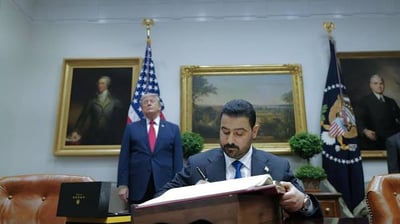
The geopolitical landscape of the Middle East is preparing for a historic transformation as the United States prepares to completely withdraw its remaining military forces from Iraq. In a major joint briefing held at the White House on Tuesday, 14 July 2026, US President Donald Trump and Iraqi Prime Minister Ali al-Zaidi formally confirmed that all American troops will leave the nation by 30 September 2026. This monumental announcement brings a definitive conclusion to a 23 year military footprint that originally began with the massive 2003 invasion to topple Saddam Hussein. The decision marks the final fulfillment of a bilateral security agreement initially structured back in 2024 under the previous administration, which aimed to systematically wind down the global coalition mission against the remnants of the Islamic State terror group. Over the last few years, American forces have drastically scaled down their operations, transferring the primary burden of local counter terrorism duties directly to heavily trained Iraqi security forces.
During the high profile Oval Office meeting, both world leaders emphasized that the exit of uniform personnel does not signal an end to bilateral ties, but rather a pivot toward deep financial and commercial integration. Prime Minister al-Zaidi explained through an interpreter that while American forces will be entirely out of Iraq by the designated deadline, major US businesses and energy conglomerates will be highly active inside the country. President Trump echoed this sentiment, stating that the bilateral relationship has evolved into a massive economic dynamic where permanent armed enforcement is no longer required. To emphasize this economic alignment, the Iraqi delegation used the Washington visit to pitch multi billion dollar infrastructure investments to corporate giants. A central highlight of the new economic framework includes an impending deal with energy entities like Chevron and TI Capital to construct an advanced oil pipeline capable of shifting 2000000 barrels of crude per day from Basra to Haditha, eventually linking to key shipping ports.
This sudden military exit provides an excellent opportunity for local sovereignty, yet it forces independent observers to question the volatile regional security vacuum left behind. The Iraqi government has explicitly linked the successful completion of the Western troop drawdown to a highly ambitious plan to disarm powerful Iran backed militias operating within its borders. Prime Minister al-Zaidi declared that after 30 September, no independent entity will be legally permitted to bear arms outside direct state authority. However, implementing such a sweeping ban on heavily armed, ideologically driven factions is much easier said than done. For over a decade, these regional militias have possessed massive political clout and separate operational structures inside Iraq. Expecting them to completely drop their weapons simply because American advisers leave the green zone is highly optimistic, and it could potentially spark intense internal friction or localized power struggles that might destabilize the capital.
Despite these clear administrative risks, the formal end of the 23 year intervention marks a positive step toward authentic national self reliance for Baghdad. Moving away from the era of heavy foreign intervention allows the Iraqi military to finally assert its own executive command over domestic defense systems. Furthermore, shifting the focal point of international cooperation from military logistics to oil pipelines and energy grids provides a solid pathway to boost the local economy and repair critical infrastructure. By transforming an unwanted military occupation into a standard corporate and trading relationship, both nations stand to gain massive shared benefits. The ultimate success of this transition will depend entirely on whether the domestic Iraqi government can maintain strict internal security and successfully keep regional armed factions under total state control as the final American units fly home.