
Ukraine War Officially Lasts Longer Than World War I As Brutal Trench Stalemate Passes 1567 Days
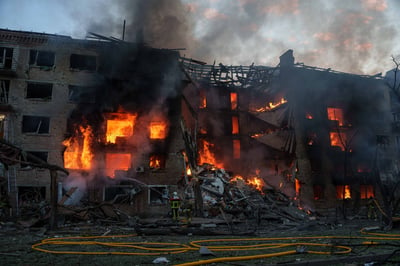
The geopolitical landscape of Europe has crossed a profoundly dark milestone as the full scale invasion of Ukraine officially becomes longer than World War I. Hostilities during the First World War lasted for exactly 1,567 days between July 28, 1914, and November 11, 1918. By passing 1,568 days of continuous, high intensity combat since the initial assault on February 24, 2022, the current conflict has shattered early assumptions of a swift military campaign and evolved into a grueling battle of endurance. While many historians and regional experts rightly argue that the true framework of this aggression began much earlier with the annexation of Crimea in 2014, the sheer duration of the total, unmitigated warfare currently taking place has officially pushed modern Europe into completely uncharted historical territory.
The battlefield realities anchoring this conflict carry eerie structural parallels to the Western Front of the previous century, yet they are driven by entirely modern technical components. Initial rapid offensives aimed at securing a decisive, regime changing victory in Kyiv were eventually repelled, forcing both heavily armed sides into a protracted stalemate. Soldiers on the frontline are heavily reliant on deep dugouts and defensive trench networks reminiscent of northern France a century ago, but the tactical execution is entirely different. The pervasive presence of reconnaissance and kamikaze drones has completely eliminated the feasibility of historical mass infantry charges. Instead, the modern theater relies on hyper fragmented assaults by tiny teams of one or two personnel under the constant, unblinking surveillance of unmanned aerial systems, creating a meat grinder environment where survival requires digging deeper rather than building vast, interconnected trench networks.
This agonizingly slow pace of geographic movement highlights a profound operational gridlock that is structurally distinct from the rapid maneuver warfare of the mid twentieth century. Prominent thrusts in heavily contested areas have seen lines shifting at a sluggish average pace of between 15 and 70 meters per day, a rate of advance that actually tracks slower than some of the bloodiest, most deadlocked campaigns of World War I like the Battle of the Somme. While the sheer scale of global troop mobilization and total casualty counts in the two world wars remain distinct from this regional flashpoint, the current loss of life and strain on domestic resources are unprecedented for the twenty first century. The conflict has settled into a pure test of industrial willpower and manufacturing depth, where victory is pursued not through grand territorial breakthroughs, but through the systematic economic and material exhaustion of the opponent.
Despite the agonizing duration, the political structure and social resilience governing the Kremlin show a marked difference from the internal collapse experienced by Tsar Nicholas II in 1917, even as economic strains begin to manifest. Strategic adaptations, such as utilizing localized commercial drone saturation to offset manpower deficits and targeting critical economic energy lifelines, represent the contemporary evolution of historical naval blockades and resource isolation strategies. As the conflict continuously resets the benchmarks of modern military endurance, it underscores a powerful and sobering narrative regarding the return of industrial state on state warfare. The crossing of this temporal threshold proves that when modern defensive technology successfully neutralizes offensive maneuvers, a conflict can easily detach from initial political timelines and transform into an open ended, exhausting struggle for survival.