
US Navy Kills Three Indian Sailors In Gulf Oil Tanker Attack Will Modi Govt Have Guts To Take Action Or Just Talk And Forget
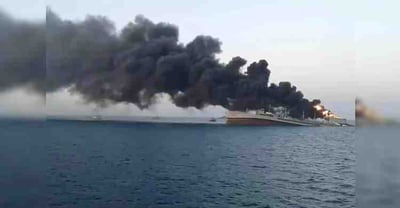
A major diplomatic crisis has erupted between New Delhi and Washington following a series of aggressive military actions by the US Navy in the Gulf of Oman. The escalation reached a tragic peak when US naval forces opened fire on the Palau flagged commercial oil tanker MT Settebello, which was carrying 24 Indian crew members. The lethal strike resulted in the immediate deaths of 3 Indian mariners, identified as deck cadet Aditya Sharma, engine fitter Shivanand Chaurasiya, and chief engineer Patnala Suresh, while 21 others had to be rescued from the disabled vessel. According to statements from the US Central Command, American forces targeted the civilian tanker after it allegedly attempted to bypass a strict naval blockade restricting maritime traffic linked to Iran. However, the violence did not stop there, as US forces disabled two more commercial vessels, the MT Marivex and the MT Jalveer, both carrying large Indian crews, within the exact same week.
In response to the mounting casualties, External Affairs Minister S Jaishankar held a high stakes phone call with US Secretary of State Marco Rubio to lodge a severe diplomatic objection. Jaishankar publicly stated that he reiterated the strong disapproval of India regarding the lethal operations conducted by the American military, emphasizing that such deadly force against international civilian merchant shipping cannot be justified under any circumstances. Simultaneously, the Ministry of External Affairs in New Delhi took the aggressive step of summoning the US Charge d Affaires, Jason Meeks, twice in less than 48 hours to convey that these recurring maritime strikes are completely unacceptable. Indian diplomats warned that the aggressive use of force by the US Navy directly undermines the security, safety, and stability of vital global trade routes during an already highly volatile geopolitical period in West Asia.
The handling of this crisis raises critical questions about the actual geopolitical leverage of New Delhi when facing high handed behavior from its closest Western strategic partner. While the current administration frequently projects a fierce, unyielding stance on national security and foreign interference, the initial response to the killing of civilian mariners has relied heavily on standard bureaucratic measures like summoning envoys and issuing stern statements on social media. By framing the actions of the US Navy as merely unjustified rather than an explicit violation of international maritime law, the diplomatic response risks appearing deeply hesitant. The clear hesitation to implement retaliatory economic measures or demand immediate independent accountability showcases the difficult tightrope the state must walk, balancing public outrage at home with the vital need to maintain long term defense partnerships with Washington. Failing to push beyond verbal warnings creates a dangerous precedent where the lives of Indian citizens operating in crucial trade corridors can be dismissed as mere collateral damage of Western blockades.
As public anger intensifies across the country over the tragic deaths of the seafarers, the pressure is mounting on top leadership to deliver concrete results rather than routine diplomatic rhetoric. India remains one of the largest suppliers of maritime manpower in the entire world, making the safety of its global workforce a highly sensitive domestic issue. While American authorities continue to defend their blockade tactics by pointing to rising regional friction and alleged drone threats near the Strait of Hormuz, civilian merchant ships should never become targets for military target practice. The ultimate test for the current administration lies in whether it can successfully secure binding operational guarantees and comprehensive financial compensation from the United States government. If the bilateral engagement ends without clear consequences for the loss of civilian life, it will signal a significant gap between powerful domestic political posturing and actual global enforcement capability.