
Wearing Hijab Not an Essential Religious Practice in Islam Says Allahabad High Court as Plea Against School Uniform Policy Dismissed
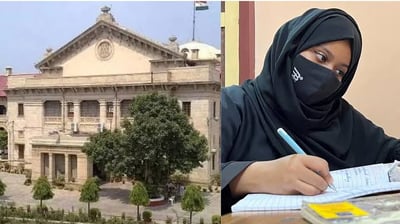
The Allahabad High Court has held that wearing a headscarf cannot be established as an essential religious practice in Islam, ruling that educational institutions possess the legitimate authority to enforce a uniform dress code to maintain institutional discipline and equality. The decision came as a Division Bench dismissed a writ petition filed by a minor Muslim student seeking a judicial directive to allow her to wear a hijab over her prescribed school uniform. The court emphasized that requiring students to adhere strictly to a standardized uniform fosters a religion-neutral environment in classrooms and prevents social separateness among learners.
The ruling was delivered by a bench comprising Justice J.J. Munir and Justice Indrajeet Shukla while hearing a petition filed by a Class 11 student against Tagore Public School in Prayagraj. The petitioner approached the High Court after the school management allegedly denied her admission to Class 11 because she insisted on wearing a headscarf with her uniform. The student argued that wearing a hijab is an integral religious obligation protected under her fundamental rights to equality, freedom of speech, and religious expression under Articles 14, 19(1)(a), and 25 of the Constitution. She also contended that she had been permitted to wear a headscarf in the same school from Class 6 onwards without facing any administrative objections.
Addressing the petitioner's argument regarding past permission, the High Court clarified that the school's previous lack of objection did not create a permanent or legally enforceable right to bypass uniform regulations. The judges observed that the administration might not have enforced the policy earlier due to inaction, lack of will, courtesy, or hesitation. However, such past tolerance cannot prevent an educational institution from strictly implementing its uniform policy or enforcing a mandatory dress code at a later stage.
Applying the essential religious practices doctrine, the High Court held that the petitioner failed to place any authoritative material on record to establish that wearing a hijab is fundamental to the Islamic faith. The bench observed that there was no evidence demonstrating that a Muslim woman or girl would be considered to have abandoned or been ousted from her faith if she chose not to wear a headscarf. The court noted that attire-related choices, while personal, cannot automatically be treated as indispensable religious mandates that override non-discriminatory institutional rules.
The bench further examined class photographs submitted in the case records, noting that no other female student in the institution, including those belonging to the same religious community, wore a headscarf with the uniform. The judges stated that permitting individual exemptions to the prescribed dress code on subjective grounds would create distinct categories of students, undermining the sense of unity and equality that a standard uniform is designed to achieve. The court emphasized that transferring the authority to decide school attire from the institution to individual students would severely weaken school discipline.
In formulating its judgment, the Allahabad High Court referenced earlier rulings from the Bombay High Court, Kerala High Court, and Karnataka High Court. It highlighted the 2022 Full Bench judgment of the Karnataka High Court, which held that wearing a hijab is not an essential religious practice under Article 25. While acknowledging that appeals against the Karnataka decision resulted in a split verdict in the Supreme Court and remain pending before a larger bench, the High Court noted that the Karnataka ruling continues to serve as persuasive authority in the absence of a final contrary ruling.
Concluding the proceedings, the High Court affirmed that as long as a school dress code is applied equally, bona fide, and without religious discrimination, prescribing and enforcing the uniform falls entirely within the administrative domain of the educational institution.