
Why Does Modi Not Care About The Shocking Fourth Time NEET Paper Leak As Massive Protests Rocket Through Hyderabad
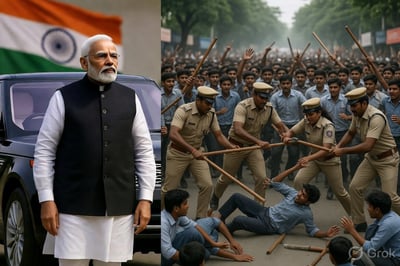
The streets of Hyderabad turned into a sea of flashing torches and angry slogans as hundreds of heartbroken students and worried parents gathered at Tank Bund to protest the massive National Eligibility cum Entrance Test paper leak. Organized by various youth and student groups, the demonstration grew from a small gathering into a massive crowd of over seven hundred people marching all the way from the Indira Gandhi statue to the Rajiv Gandhi statue. Holding bright placards and demanding absolute accountability, the protestors expressed deep agony over how the country premier medical entrance examination has turned into a recurring nightmare for honest aspirants. Families who spent their hard earned savings on coaching classes stood alongside exhausted young adults who have been studying day and night, all united by a single demand for a transparent judicial investigation into the massive breakdown of the system.
The immediate catalyst for this public outrage was the sudden nationwide cancellation of the examination after critical question sets were found circulating on social media and encrypted messaging platforms prior to the test date. What makes the current crisis deeply unsettling is that this marks a devastating pattern of systemic failures under the watch of the central administration. Across the country, students are raising serious questions about the apparent indifference of Prime Minister Narendra Modi, pointing out that this represents the fourth major time that a high stakes medical entrance exam has faced severe leakage allegations or structural compromises. Activists on the ground openly condemned the central administration for failing to safeguard national level examinations despite multiple promises of structural overhauls, asking why stricter digital protocols have not yet been implemented to completely eliminate corruption in the testing system.
The growing crisis highlights a deeply fractured system where affluent individuals can easily bypass years of intense competition. Investigators have already unmasked several syndicates where leaked question papers were allegedly sold for ten to fifteen lakh rupees to wealthy families, ensuring top ranks for candidates who could barely clear basic school boards. This corrupt reality completely destroys the level playing field for millions of underprivileged and marginalized students who view a medical seat as their only ticket out of financial hardship. By forcing nearly twenty two lakh young aspirants to appear for a stressful re examination in June, the administration has placed an immense psychological and financial burden on ordinary families who now have to pay extra for hostels, travel, and extended tuition. While the National Testing Agency claims it maintains a zero tolerance policy, the sheer repetition of these leaks shows that current regulatory bodies are completely incapable of protecting the sanctity of the academic process.
Ultimately, the escalating protests in Hyderabad and other major cities represent a complete breakdown of trust between the youth of India and the ruling government. The decision to hand over the investigation to central agencies seems like a temporary damage control exercise rather than a permanent solution to an ongoing crisis. For an administration that prides itself on creating a digital superpower, the inability to securely conduct a paper based exam without structural breaches serves as a massive disappointment. If the leadership continues to ignore the collective frustration of millions of families, the long term damage will extend far beyond cancelled exams. It will permanently erode public faith in national meritocracy, leaving a generation convinced that wealth and political connections matter far more than genuine hard work and academic excellence.