
Why poor families in Bihar send their children to distant residential religious school
The quiet villages of the Araria district in Bihar are witnessing a painful and silent migration of young children traveling hundreds of miles away from home. Araria holds the unfortunate title of being the poorest district in the state according to national multidimensional poverty indexes with over half of its population living well below the poverty line. For the local families who mostly survive on unpredictable agricultural labor or low paying manual work earning just a few hundred rupees a day providing even two basic meals a day to a large household is a constant battle. This extreme financial distress combined with a regional literacy rate that barely touches fifty three percent has created a desperate situation. When local government schools fail to provide reliable support or adequate learning environments parents feel they have no choice but to look for alternative pathways to ensure the basic survival of their young offspring.
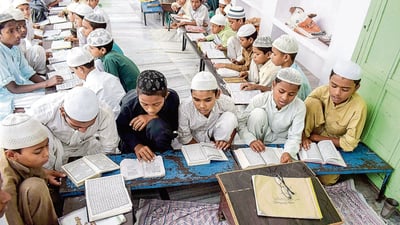
This stark reality has established a widespread system where young children are sent to free residential religious schools known as madrasas located in distant states like Maharashtra, Karnataka, and Odisha. In these institutions the children receive free lodging, clothing, and meals alongside their traditional and basic academic education which relieves an enormous financial burden from their struggling parents. A local network of teachers who originally hailed from these same villages often facilitates this transit by convincing parents that their children will have a secure future. For a daily wage laborer managing a massive family sending one or two children away is not a choice made out of neglect but rather a desperate leap of faith to save them from a cycle of starvation. The promise of a safe environment and regular meals outweighs the deep emotional pain of separating from a child who might be as young as ten years old.
However this informal educational migration system has run into severe complications as state authorities across transit regions step up their vigilance. Dozens of children traveling in large groups from Bihar have been intercepted and placed into temporary state shelter homes under suspicion of illegal child trafficking or forced labor. Local child welfare officials note that while the majority of parents act purely out of good faith the low literacy rates mean that many families blindly trust operators without ever checking the infrastructure or safety of the destination institutions. In rare but deeply concerning instances children sent away under the guise of acquiring an education have been redirected into hidden commercial labor channels. This increasing regulatory scrutiny places a heavy psychological burden on impoverished parents who now find themselves questioned by law enforcement while merely trying to secure a future for their kids.
The entire crisis highlights a severe structural failure in the regional development and public educational infrastructure of rural Bihar. The state educational system has struggled to offer accessible high quality residential schooling that can genuinely compete with the comprehensive free care provided by outside religious bodies. While government policies focus on stopping the movement of minors at railway stations this reactive policing does not fix the underlying issues of systemic hunger, lack of industrial employment, and institutional neglect in the border districts. True resolution can only come when the local government implements targeted economic welfare programs and builds well equipped local schools that offer free nutritious meals. Until the core issues of structural poverty and inadequate public education are directly resolved families will naturally continue to make desperate choices to ensure the basic survival of the next generation.