
Youth Congress Burns Ravan Effigy Bearing Chief Election Commissioner Gyanesh Kumar Face In Vote Chori Ki Raasleela Protest Demanding Resignation
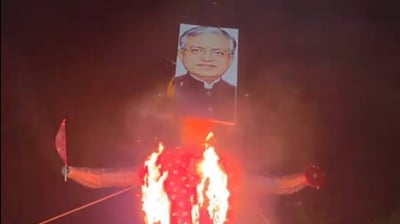
A sharp political demonstration unfolded in the heart of New Delhi as youth activists took to the streets to challenge the credibility of the national election machinery. Members of the Indian Youth Congress staged a high-voltage street performance titled Vote Chori Ki Raasleela, using traditional festival symbolism to express deep anger over the state of democratic institutions. The centerpiece of the demonstration was a towering effigy of Ravan fitted with a photographic cutout of Chief Election Commissioner Gyanesh Kumar, which was set ablaze in front of roaring crowds of party workers and curious onlookers. The dramatic protest marked a sharp escalation in the opposition campaign demanding complete transparency and institutional accountability in the conduct of public elections.
The dramatic street theatre drew heavily on the cultural imagery of Dussehra, where the burning of multi-headed effigies traditionally celebrates the victory of truth over evil. Activists used the occasion to argue that manipulation of voter rolls represents modern betrayal of the public trust. Surrounded by party flags and anti-government banners, demonstrators chanted slogans calling out electoral theft, demanding that top officials overseeing the poll body either explain massive irregularities in voter registrations or step down from their constitutional chairs.
Indian Youth Congress National President Uday Bhanu Chib addressed the gathering, stating that the burning of the effigy reflects the mounting frustration of young citizens across the country. Chib accused the election chief of eroding constitutional foundations and systematically weakening democratic traditions. Speaking to reporters at the protest site, Chib asserted that democracy is not merely about pressing a button on polling day, but about ensuring that every vote is protected and that institutions remain answerable to the people. He declared that the youth organization would continue staging agitations across the country until the election commissioner resigns or faces legal accountability for alleged wrongdoing.
The demonstration was organized alongside a broader digital outreach initiative titled Digital Ravan Dahan. Through an online portal, the youth wing invited citizens from across the nation to identify what it described as the ten heads of modern oppression, highlighting public issues such as youth unemployment, price rise, electoral manipulation, and executive overreach. Youth Congress leaders noted that thousands of young voters had registered their voices on the digital portal to express concern over how constitutional watchdogs have become submissive to political pressure.
The protest has focused heavily on the ongoing Special Intensive Revision of electoral rolls carried out by the election authority. Opposition parties have repeatedly alleged that large numbers of genuine voters, particularly from marginalized communities and minority backgrounds, have been arbitrarily scrubbed from voting lists without prior verification. Leaders claimed that while duplicate entries and discrepancies remain unaddressed, legitimate citizens find their names missing on voting day, creating deep suspicion about the impartiality of the election management body.
Delhi Youth Congress state president Akshay Lakra joined the protest, stating that young activists are prepared to face police barricades and detention to safeguard the sanctity of the ballot. Lakra pointed out that constitutional institutions like the Election Commission were designed to act as independent arbiters standing between the citizen and the ruling regime. When those watchdogs begin operating in secrecy and dismiss valid evidence presented by political parties, public trust completely collapses, forcing citizens onto the streets to defend their fundamental rights.
The ruling establishment has dismissed the protests as political grandstanding, claiming that the opposition is attempting to manufacture distrust in democratic processes because of its repeated electoral defeats. Ruling party spokespersons maintained that the election authority follows strict legal procedures and transparent voter revision guidelines that allow political representatives to raise formal objections at every booth level. Supporters of the administration argued that burning effigies of constitutional heads undermines the dignity of national institutions and sets a harmful precedent for democratic debate.
Despite official dismissals, the Indian Youth Congress announced that it will expand its protests to state capitals and district headquarters in the coming weeks. Student unions, civil liberties groups, and opposition allies have signaled support for the agitation, warning that public faith in the ballot box is non-negotiable. As videos of the burning effigy circulated widely across social media networks, the protest delivered an uncompromising message to the authorities: young citizens are closely watching the electoral process, and demands for institutional fairness will not be easily extinguished.