
Assam Flood Toll Rises: 21 Killed In A Day As 5.6 Lakh People Get Affected Across 16 Districts
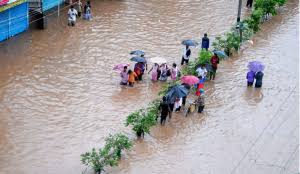
A quiet morning in Upper Assam quickly turned into a fight for survival on July 21, 2026, as raging floodwaters swept through hundreds of peaceful countryside homes. Heavy rains caused by a massive cloudburst further upstream transformed gentle local streams into violent torrents within just a few hours. Families in the district of Sivasagar were forced to leave their ancestral property behind, carrying whatever small belongings they could grab before rushing toward elevated roads or rooftops. In a single harrowing period of 24 hours, the death toll jumped sharply as 21 individuals lost their lives to drowning and flood hazards, taking the overall loss of human life across the state to 31 during this monsoon season. The emotional weight on local communities is profound, as mothers, fathers, and young children in places like Sivasagar, Charaideo, Golaghat, and Jorhat find themselves searching for safety while water levels continue to rise at an alarming speed.
The disaster has now affected more than 5.6 lakh residents spread across 16 districts in Assam, including 872 villages that are completely under water. In Sivasagar alone, nearly 3.59 lakh people are struggling with missing roads, lost power supply, and inundated drinking water sources. Local transport has come to a near halt, with railway tracks in the Simaluguri sector submerged under deep water, forcing railway authorities to stop or change the route of multiple passenger trains. Over 71 active emergency camps have been set up to shelter 12,284 displaced citizens, while more than 202 distribution points are working day and night to hand out dry food packets, fresh drinking water, and essential medicines. Rescue teams from the Indian Air Force, the National Disaster Response Force, state disaster workers, and local volunteers are navigating inflatable boats through flooded streets to save stranded families, including elderly individuals and small children who were trapped inside inundated homes.
Major rivers in the region have crossed their danger limits, creating a widespread crisis for both human life and rural livelihoods. The powerful Brahmaputra, along with its key tributaries like the Dikhou, Disang, Burhidihing, and Dhansiri, are flowing well above historical safety marks. Beyond the human suffering, the agrarian heart of Assam has suffered a devastating blow, with more than 24,210 hectares of crop land submerged underwater, destroying months of hard work by local farmers. In addition, nearly 1.85 lakh domestic animals and poultry have been impacted, leaving livestock owners without fodder or dry ground to keep their animals safe. To maintain critical communication, telecommunication authorities have enabled free intra circle network roaming across Sivasagar, Charaideo, and Jorhat so that families can stay in touch with emergency response teams and loved ones during this dark phase.
Recurring riverbank erosion and structural damage to older embankments repeatedly expose rural communities to sudden flooding during intense weather events. While sudden cloudbursts in higher mountain regions act as an immediate trigger, the long term vulnerability of these low lying river basins stems from aging protection walls and rapid silt accumulation in main river beds that reduces water carrying capacity. State leadership, including Chief Minister Himanta Biswa Sarma, scheduled personal visits to inspect relief camps and monitor ground operations on July 22, 2026, reassuring affected families that emergency funds and essential supplies remain fully available. Moving forward, combining immediate rescue efforts with modern river management techniques, stronger embankments, and early warning systems will be key to protecting vulnerable communities from facing similar heartbreak every monsoon season.