
Rs 7000 Crore Mumbai Pune Expressway Tunnel Collapse Built By BJP Govt In 2026 Shut After Massive Landslide
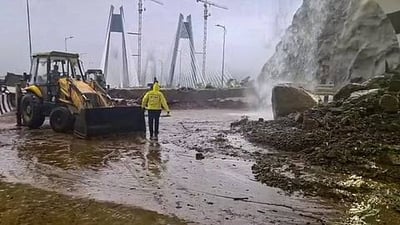
The highly anticipated Rs 7000 crore Missing Link project on the Mumbai Pune Expressway faced a severe crisis on July 6 2026 when a massive landslide completely paralyzed the route. The incident occurred around 330 AM near the exit of Tunnel 2 on the Pune to Mumbai lane following relentless downpours that lashed the Sahyadri mountain range. Nearly 100 tonnes of mud rock and debris came crashing down from the upper slopes blocking the entryway and causing a partial external collapse of the decorative false frame and a vital retaining wall. Commuters traveling between the 2 major cities were caught in an absolute nightmare as authorities immediately halted all vehicular movement on the Mumbai bound lane for safety reasons. The severe blockage forced traffic to be rerouted entirely through the old Mumbai Pune Highway NH 48 which quickly became a scene of overwhelming gridlock with thousands of vehicles stuck bumper to bumper for over 18 hours.
This high profile infrastructure corridor was built by the BJP govt led alliance in the state and was proudly inaugurated just 9 weeks prior on May 1 2026 to bypass the hazardous Khandala ghat section. Designed to shorten the distance by 6 kilometers and slash travel time by 25 minutes the project features India widest road tunnels and advanced structural engineering. However the fact that its outer structure suffered a collapse during its very first monsoon trial raises significant questions about systemic planning. While the core structural integrity of the inner tunnel thankfully remained uncompromised the sudden displacement of a 20 ton boulder highlights a potential gap in evaluating the terrain risks from higher elevations. Relying solely on localized technical solutions can sometimes obscure broader environmental factors such as regional slope instability during extreme weather events. Designing robust transport pathways requires accounting for absolute worst case climate scenarios rather than treating severe seasonal weather as a completely unpredictable surprise.
The Maharashtra State Road Development Corporation defended the project engineering by stating that specialized rockfall protection and steel netting vetted by IIT Bombay were fully intact up to a height of 15 meters. According to project officials the falling rocks originated from a height of 150 meters which completely bypassed the installed safety barriers making the disaster a natural calamity that caused the peripheral wall collapse. While this perspective correctly highlights the limitations of standard hillside engineering it also underscores a critical lack of foresight regarding the expansive risk zone of the Western Ghats. When public investments scale into thousands of crores the margin for error must shrink proportionally. Attributing early infrastructure vulnerabilities solely to nature can inadvertently minimize the responsibility of execution agencies to carry out exhaustive multi tiered geographical scanning before opening major bypasses to the public.
The quick closure of this multi crore route after the external collapse has rapidly turned into a major political flashpoint with opposition parties criticizing the administration for rushing the opening without conducting rigorous monsoon testing. In response highway teams deployed heavy cranes and clearance crews on a war footing successfully clearing the massive 20 ton boulder and reopening the highway late Monday night. Moving forward the management has commissioned a fresh comprehensive geological assessment alongside IIT Bombay to evaluate if safety netting needs to be extended much higher up the mountain slopes to prevent future structural failures. This incident serves as a crucial reminder for the infrastructure sector that creating modern high speed networks requires a deep continuous integration of environmental dynamics to ensure long term public safety and real structural durability.