
Falling Rupee Gives Telangana Unexpected 400 Crore Cash Inflow For Musi River Project
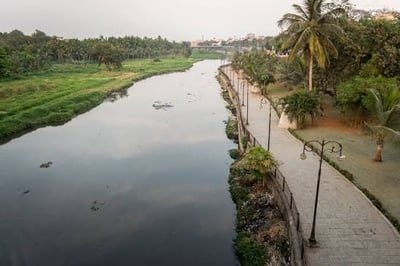
Hyderabad is witnessing a surprise financial development that has given a major boost to its ambitious urban restoration efforts. The ongoing depreciation of the Indian rupee against the US dollar has unexpectedly turned into a massive fiscal bonus for the local administration. Over a year ago, the state government approached the Asian Development Bank for external funding to kickstart the historical rejuvenation of the Musi River corridor. At the time of the initial negotiations, the international financial institution approved a loan package of 500 million dollars, which directly converted to roughly 4,100 crore rupees based on the prevailing exchange rate of 82 rupees per dollar. However, due to shifting global macroeconomic dynamics, the domestic currency dropped closer to 95 rupees per dollar, pushing the total converted valuation of the exact same loan up to a staggering 4,500 crore rupees. This automatic valuation jump leaves the executing agencies with a windfall of 400 crore rupees that requires zero extra debt burdens or additional international negotiations.
The implementation authority, officially known as the Musi Riverfront Development Corporation Limited, is moving swiftly to utilize this injection of funds as ground operations move from planning to execution. The state government recently granted explicit administrative sanction of 7,345.12 crore rupees specifically dedicated to Phase 1 of the grand revitalization project. This priority layout focuses intensely on a crucial 21 kilometer stretch divided systematically into two distinct zones. Zone 1A covers a 9.2 kilometer expanse stretching from Himayatsagar to Bapughat, while Zone 1B covers an 11.8 kilometer corridor running from Osmansagar to Bapughat. The aggregate master planning is led by an expert global consortium comprising Meinhardt Singapore, Cushman and Wakefield, and RIOS, ensuring the design aligns with iconic international models like London’s Thames or Seoul’s Cheonggyecheon stream. By applying the multi-million dollar loan directly to these specified zones, the state effectively minimizes the immediate local funding gap that domestic development bodies like the Hyderabad Metropolitan Development Authority and the Telangana Industrial Infrastructure Corporation would otherwise need to cover through heavy internal borrowing.
A deeper examination of this development reveals that the currency fluctuation acts as a crucial safety valve against inflationary pressures. Megaprojects across the country frequently suffer from extensive cost overruns due to the rising prices of basic construction raw materials like steel and cement, alongside the high fees associated with international engineering consultants. The sudden 400 crore rupee surplus acts as an ideal fiscal cushion, allowing project engineers to deploy liquid capital on the ground without running back to the state treasury for supplementary budgetary allocations. Furthermore, this dynamic shifts the immediate structural pressure away from local state organs, allowing the engineering procurement construction framework to operate smoothly. The sudden influx ensures that the initial five kilometer high priority pilot stretch can proceed with minimal delays, giving the state a rare financial advantage right when field mobilization is hitting its peak.
However, a comprehensive long term view demands a look past the immediate celebration of free liquid cash. While a weaker local currency provides a brilliant short term windfall during the capital deployment and disbursement stage, it introduces potential risks regarding the back end repayment schedule. Decades down the line, when the state must repay the principal amount to the Asian Development Bank, a weaker rupee will require significantly more domestic revenue to satisfy the fixed dollar debt. Additionally, the project faces intricate localized challenges that cash alone cannot solve, such as intense public anxieties regarding the 50 metres buffer zone boundaries, land acquisition hurdles near dense residential setups, and complex legal disputes regarding transferable development rights. If administrative inefficiencies or legal gridlocks stretch the construction timeline past the intended target of December 2027, the initial currency advantage could quickly be swallowed up by rising interest dynamics and holding costs. True success relies entirely on how efficiently the executing agency converts this unexpected financial luck into fast, concrete progress on the ground before broader global economic forces shift once again.