
Tribal Protests Against Ken Betwa River Link Project intensifies in Madhya Pradesh on 19 July 2026
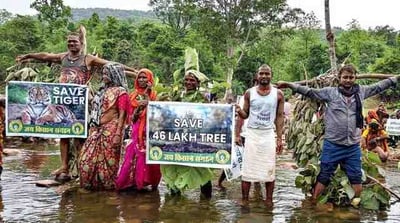
The peaceful banks of the Barana river near Kupi village in Madhya Pradesh turned into a focal point of intense confrontation on 19 July 2026 when police personnel moved early in the morning to dismantle a fifteen day tribal demonstration site. Indigenous families and local villagers from Panna and Chhatarpur districts had been staging desperate symbolic demonstrations including standing in deep water for hours lying on symbolic wooden pyres and wearing symbolic nooses around their necks to register their outrage. The government project costing roughly 44,605 crore rupees seeks to transfer excess water from the Ken river basin to the drought prone Betwa river basin across the Bundelkhand region spanning parts of Madhya Pradesh and Uttar Pradesh. However tribal communities fear complete loss of their ancestral lands, surrounding forests, daily livelihoods, and deep rooted cultural identity.
Security forces moved into the makeshift encampment around 5 am on 19 July 2026, forcefully removing activists and taking movement leader Amit Bhatnagar into custody after he completed 14 days on an indefinite hunger strike. Protest leaders alleged that the sudden administrative action was deliberately timed to suppress a public press briefing where organizers intended to expose alleged financial irregularities worth 400 crore rupees related to compensation distribution. The government administration maintained that the clearance was purely a safety intervention driven by rising river water levels and heavy rainfall warnings from meteorologists. Despite police claims that demonstrators were safely boarded onto buses and transported back to their home villages, videos from the location captured police officers dragging protesting tribal women away from the surging riverbank.
The core grievance of the displaced indigenous populations stems from systemic administrative failures during land acquisition and social impact assessments. Tribal leaders point out that critical gram sabha consultations mandatory under the Panchayats Extension to Scheduled Areas Act of 1996 were reduced to mere paperwork formalities without informing affected communities. Furthermore, hundreds of families affected by connected schemes like the Majhgaon and Runjh irrigation projects claim they were completely excluded from displacement lists while arbitrary compensation packages remain far below actual market values. Environmentalists have also voiced strong opposition because the vast reservoir constructed for the project will submerge critical tiger habitats inside the Panna National Park and Tiger Reserve, destroying local biodiversity.
This ongoing confrontation exposes the severe human cost often hidden behind mega infrastructure initiatives designed in urban planning offices. While state authorities market the river interlinking plan as a ultimate solution for drinking water scarcity across 65 lakh residents in Bundelkhand, forcing indigenous communities off their ancestral lands without fair compensation creates deep economic inequality. The strategy of forcibly clearing peaceful demonstration sites and detaining hunger striking leaders only hardens public resistance rather than resolving underlying structural failures. Long term success for large public infrastructure requires absolute transparency in financial payouts, honest environmental assessments, and genuine respect for the constitutional rights of vulnerable indigenous populations.