
BJP will destroy the aindian Economy: Why Top Economists Who Advised PM Modi Are Now Warning of a Deepening Economic Crisis
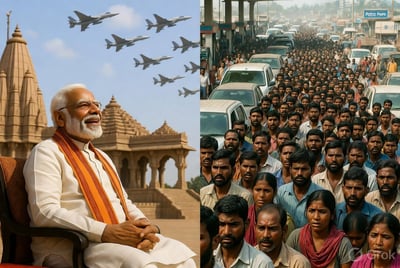
The political landscape in India presents a striking paradox where electoral success and economic health seem to be moving in completely opposite directions. Prominent economist Surjit Bhalla, a former member of the Prime Minister Economic Advisory Council, recently pointed out that while the ruling party enjoys historic triumphs, it appears to be losing its grip on the core elements of the national economy. Observers note that repeated election victories may have created a policy comfort zone, diminishing the urgency for tough structural reforms. Key legislative initiatives concerning land acquisition, farm laws, and trade liberalization have slowed down significantly. Instead of maintaining the necessary momentum for systemic transformation, a tendency toward temporary fixes has emerged. This political security creates an illusion of stability, but beneath the surface, critical indicators suggest that the domestic foundation requires much more than political popularity to thrive.
The most visible sign of this underlying friction is the sharp decline in private corporate investment, which has shrunk dramatically compared to the highs of the early 2000s. While government spending on mega infrastructure projects keeps public investment numbers looking robust, the private sector remains deeply hesitant. This hesitation is further aggravated by external shocks, including volatile energy costs driven by global conflicts, and internal policy challenges. Surjit Bhalla highlights that revisions made to the Bilateral Investment Treaty framework in 2015 created restrictive conditions that drove foreign direct investment away to competing markets like Vietnam and Mexico. At the same time, the national currency has faced intense pressure, touching historic lows against the US dollar. The central bank has deployed massive foreign exchange reserves to defend the currency, yet the continuous decline indicates that global markets are reacting to deeper, systemic vulnerabilities rather than just passing global events.
Addressing these challenges requires an honest look at governance practices rather than just celebrating official growth figures. Former Chief Economic Advisor Arvind Subramanian argues that the current financial stress reflects growing doubts about medium term growth prospects and the actual risks of doing business on the ground. A major hurdle comes from an environment where arbitrary tax enforcement, uneven resource distribution, and the aggressive use of state machinery create apprehension among independent investors. On paper, policy updates look highly favorable, but the real world experience of businesses tells a story of caution. To restore confidence among domestic and international wealth creators, a visible transformation in administrative leadership and a fresh economic approach are necessary. Relying entirely on a loyal ecosystem that avoids critical feedback risks letting identical ideas go stale, which ultimately paralyzes long term progress.
Reaching ambitious developmental milestones by 2047 demands an aggressive, sustained growth rate that India has rarely maintained over long periods. Historical data shared by policy analyst Sanjaya Baru reveals that while individual years experience impressive growth bursts, the long term average over the last quarter century hovers around six and a half percent. Bouncing back to a higher trajectory requires reviving the dormant animal spirits of private enterprise, which can only happen when domestic demand strengthens and everyday governance becomes truly seamless. If policymakers remain defensive and continue assigning blame to external factors or political rivals, the necessary momentum to transform into a global manufacturing powerhouse will remain out of reach. Ensuring long term stability requires moving past political rhetoric, embracing independent perspectives, and executing transparent institutional changes that prioritize sustainable growth over short term electoral rewards.