
DMK Signals Potential Support For Delimitation Bill In Parliament Boosting NDA Numbers On July 19 2026
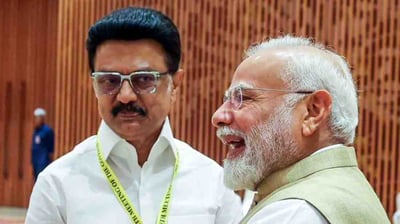
A massive political transformation took shape in New Delhi on July 19 2026 during the traditional all-party consultation held ahead of the parliamentary Monsoon Session. The Dravida Munnetra Kazhagam led by Tamil Nadu Chief Minister MK Stalin, which commands a crucial bloc of 22 Lok Sabha members, indicated that it is open to supporting the ruling National Democratic Alliance on the upcoming Constitution Amendment Bill for delimitation. Senior party leader and member of Parliament Tiruchi Siva confirmed that while the regional party previously opposed the measure alongside opposition partners, it is now willing to reconsider its stance provided the central government offers concrete guarantees that southern states will not lose their proportional political representation. This unexpected willingness to negotiate provides a dramatic numerical boost to Prime Minister Narendra Modi led government as it seeks to muster a 2-thirds majority in Parliament for redrawing constituency boundaries.
The core concern surrounding the delimitation exercise stems from decades of successful demographic management in southern states compared to higher population growth in northern belts. Under existing constitutional provisions, Lok Sabha seat allocations were frozen based on the 1971 census to ensure states implementing effective family planning were not penalized with reduced parliamentary weight. However, with the freeze ending, southern political leaders expressed fear that a simple population based redrawing would shrink South India share of seats from 23.74 percent down to 18.97 percent. To address these anxieties, central government managers indicated willingness to introduce a uniform 50 percent increase in Lok Sabha seats across all states, raising the total strength of the house to 850 members. Tiruchi Siva emphasized on July 19 2026 that if the government explicitly writes this 50 percent increase into the bill text to ensure no state loses its relative share, the Dravida Munnetra Kazhagam will evaluate the proposal with an open mind.
This tactical realignment follows significant political reshaping within Tamil Nadu and the broader national coalition framework over recent months. Following intense political friction after the recent state assembly elections, where Congress established fresh local arrangements with actor Vijay led TVK, relations between Dravida Munnetra Kazhagam and Congress cooled considerably. Party insiders revealed that Dravida Munnetra Kazhagam leadership no longer considers itself bound by opposition bloc mandates, choosing instead to prioritize direct state bargaining over collective obstruction. With 22 members in the Lower House, support from the Tamil Nadu party along with potential backing from other regional outfits like the 8 member Nationalist Congress Party faction drastically reduces the gap facing the ruling alliance, which currently holds 329 seats and requires 362 votes to pass constitutional amendments.
Looking closely at this evolving political dynamic reveals how regional survival instincts frequently outweigh rigid coalition alliances in national politics. By shifting from outright resistance to conditional negotiation, the Dravida Munnetra Kazhagam has cleverly transformed itself from an isolated opposition voice into a critical pivot in national legislation. This strategy allows the party to demand binding legal protections for southern representation while simultaneously demonstrating administrative pragmatism to voters at home. At the same time, the central willingness to offer a uniform 50 percent seat expansion shows how constitutional amendments can be adapted to accommodate federal concerns. As Parliament convenes on July 20 2026, the potential passage of this historic bill demonstrates that securing structural legislative reforms relies on flexible bargaining, clear written guarantees, and mutual compromise between central authority and regional powers.