
Madhya Pradesh Cabinet Approves UCC Draft Bill With 5 Years Jail For Married Persons In Live In Relationships On July 19 2026
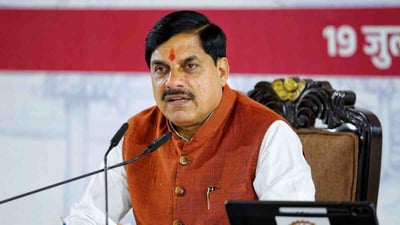
A historical shift in family law and personal rights took place in Jagdishpur near Bhopal on July 19 2026, as the Madhya Pradesh Cabinet unanimously approved the draft Uniform Civil Code Bill 2026. Chaired by Chief Minister Mohan Yadav during a special Sunday meeting, the state government cleared a legal framework designed to establish identical civil regulations for all citizens across personal matters like marriage, divorce, inheritance, and cohabitation. Among the most talked-about provisions of the new draft legislation is a strict punitive measure targeted at marital infidelity and bigamy under the guise of cohabitation. Under the proposed law, any married individual who enters into an unregistered or registered live-in relationship with another person while their lawful spouse is still alive will face a criminal conviction carrying up to 5 years of imprisonment. The state government framed this stringent measure as a essential step to protect the legal sanctity of traditional marriage, prevent desertion, and safeguard women from exploitation under unregulated informal arrangements.
Beyond penalties for married individuals, the draft legislation sets up a comprehensive regulatory system governing live-in relationships among unmarried consenting adults. Couples choosing to live together must submit a formal Statement of Live-in Relationship to the local district registrar within 1 month of starting cohabitation. Both partners must meet the statutory age requirements of 18 years for women and 21 years for men, while ensuring that neither partner falls under prohibited categories of close relationship. Should a couple reside together for more than 1 month without completing registration, they face up to 3 months of jail time or a fine of 10000 rupees. Supplying false personal details carries 3 months of imprisonment alongside a 25000 rupees penalty, while refusing to file a statement after receiving an official notice from the registrar can lead to 6 months in prison. To ensure public safety and parental awareness, local police stations will maintain records of registered couples, and registrars will inform parents if either partner is under 21 years old. Significantly, the law safeguards female partners by allowing them to claim court-mandated maintenance if abandoned, while granting complete legal legitimacy and equal property inheritance rights to all children born out of live-in relationships.
The civil code introduces sweeping reforms across personal laws to enforce absolute monogamy and eliminate long-standing discriminatory practices. The draft bill explicitly bans polygamy, instant oral triple talaq, and coercive practices like nikah halala, making them punishable criminal offences. Marriages across all communities will now require compulsory registration from village panchayat to municipal corporation levels, establishing statutory age floors of 18 years for females and 21 years for males. Furthermore, informal divorce decisions delivered by community councils or religious bodies are declared completely illegal, ensuring that a marriage can only be dissolved through formal legal procedures and binding court decrees. In property and succession matters, the law establishes equal inheritance rights for daughters and sons, removing historical inequalities where female heirs received smaller shares. Furthermore, widows and widowers are granted equal inheritance rights in deceased spouse estates, while fathers are given equal statutory status alongside mothers as primary legal heirs.
To respect cultural diversity and statutory protections, the state government specifically exempted Scheduled Tribes and Particularly Vulnerable Tribal Groups residing in protected areas under Article 342 and Article 366 sub-clause 25 of the Indian Constitution. Chief Minister Mohan Yadav emphasized that the law was drafted after examining similar frameworks in Uttarakhand, Gujarat, and Assam, alongside reviewing feedback from more than 1000000 citizens across districts. The government reported that 80 percent of Muslim women and 40 percent of Muslim men consulted during public hearings expressed support for a common legal framework that guarantees safety and equal rights. However, political opposition leaders voiced strong reservations, with Assembly Leader of Opposition Umang Singhar arguing that the timing of the bill serves to divert public focus away from pressing economic challenges like youth unemployment, inflation, and agricultural distress. The draft legislation is scheduled to be formally tabled in the state assembly during the Monsoon Session starting July 20 2026.
This legal transformation reflects an ambitious effort to modernize state civil jurisprudence by replacing fragmented personal laws with codified statutory guarantees. By establishing mandatory state oversight over cohabitation and standardizing marriage, divorce, and property distribution, the legislation prioritizes gender equality and child welfare under a single legal umbrella. At the same time, criminalizing non-registration and enforcing strict prison sentences for married individuals in live-in arrangements highlights an ongoing societal debate between state regulation of private adult choices and public policy objectives. As the draft bill moves into the legislative assembly for debate, finding a balance between individual personal liberty, fundamental constitutional rights, and protective state governance will remain a central point of discussion among legal experts, lawmakers, and citizens alike.