
Gadi Eisenkot Welcomes Benjamin Netanyahu Party To Join Unity Government Under His Leadership As Israeli Prime Minister
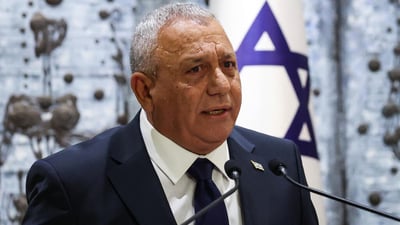
A major political transformation is unfolding across Israel as the balance of power shifts away from its longest serving leader and into the hands of a former top general. For nearly two decades, political life in the country revolved around one dominant figure who directed national defense, weathered endless political battles, and held onto power through sheer tactical skill. Yet, after months of military conflict, heavy economic strain, and deeply divided public sentiment, voters delivered an election result that broke the old status quo. The halls of the national parliament are now filled with tense whispered conversations as rival politicians calculate their numbers, wondering whether an era of uninterrupted conservative rule is finally reaching its conclusion.
The dramatic turning point arrived in November 2026 when President Isaac Herzog officially called upon Gadi Eisenkot to step forward and build the nation next governing administration. The former chief of military staff now holds a strict window of forty-two days, consisting of an initial four-week period and a possible two-week extension, to assemble a working majority of at least sixty-one votes in the one hundred and twenty seat Knesset. In his very first public appearance after receiving the formal presidential mandate, Eisenkot delivered a surprising and direct political invitation. He declared that members of Netanyahu own Likud faction, alongside far-right allies led by Bezalel Smotrich, are entirely welcome to join a national emergency coalition, but only on the condition that they accept his leadership as prime minister and respect the core principles of his platform.
The invitation was both a calculated offer of national unity and a sharp political challenge directed straight at his bitter rival. During the recent election campaign, Netanyahu and his ministers frequently told television audiences and the state president that the country needed urgent political unity during a period of ongoing security threats. Seizing upon those exact words, Eisenkot pointed out that if conservative leaders truly believe their own statements about putting the country first, they should have no problem sitting inside a cabinet led by an experienced military commander. By turning the unity argument back onto the ruling party, Eisenkot placed the burden of proof directly on Netanyahu, forcing the veteran leader to either accept a secondary role or publicly reject an offer of national solidarity.
This sudden change in fortune follows a historic national vote that exposed deep cracks in the traditional ruling coalition. Netanyahu, who led intense military campaigns across Gaza, southern Lebanon, and the wider region, saw his traditional alliance collapse from a commanding height down to just fifty-three parliamentary seats. Meanwhile, the combined Jewish-led opposition bloc gathered forty-eight seats. When President Herzog conducted closed-door consultations with every elected faction to determine who should receive the first attempt at forming a cabinet, lawmakers representing sixty-seven seats recommended Eisenkot, while only forty-six lawmakers backed Netanyahu. For the sitting prime minister, watching a clear majority of elected lawmakers endorse his opponent was an undeniable public defeat.
The critical difference that lifted Eisenkot above the required sixty-one seat mark was the historic endorsement of Arab-led political groups. In an unprecedented show of unity, factions including Raam and the Joint List captured nineteen seats together, driven by widespread anger among minority communities over discriminatory policies and harsh rhetoric from far-right ministers. When Arab lawmakers cast their united support behind Eisenkot to block Netanyahu from retaining power, they altered the mathematics of Israeli coalition building. However, holding recommendations on a piece of paper is very different from creating a stable ruling cabinet, because several conservative parties within the opposition bloc remain extremely hesitant to share power or sign formal governing deals with Arab political parties.
As he begins his six-week mission, Eisenkot faces an exceptionally narrow and fragile tightrope. His first option is to attempt a grand unity agreement with Likud, which would provide an immediate and stable parliamentary majority without requiring external support. Yet, persuading Netanyahu to surrender the prime minister office and work as a subordinate minister appears nearly impossible given his history of retaining supreme authority. If power sharing fails, Eisenkot could attempt to govern with a minority cabinet supported from the outside by Arab lawmakers, but right-leaning allies like Avigdor Lieberman have already stated they will walk away from any setup that relies on Arab votes.
The third potential avenue involves convincing religious ultra-Orthodox parties to abandon their long alliance with Netanyahu and switch sides. These traditional religious factions hold thirteen crucial seats, but welcoming them into government would require solving the most explosive social debate in the country. For decades, ultra-Orthodox young men studying sacred texts have enjoyed total exemption from mandatory military service. Eisenkot built his entire political campaign on the principle that national defense must be shared equally by every citizen, pledging to end special draft exemptions. Backing down on that core promise to secure religious votes would instantly destroy his credibility among secular and middle-class voters who demand fairness in military service.
Across the street, Netanyahu has shown zero signs of stepping aside quietly. The veteran politician immediately launched a furious counter-offensive, claiming without hard evidence that the election results were illegitimate and accusing Arab factions of attempting to hijack national decision making. Working behind closed doors, his political advisors are actively contacting individual lawmakers in rival factions, searching for weak links and attempting to peel away individual members through offers of high-level government appointments. Netanyahu strategy relies on running down the six-week clock, hoping that Eisenkot negotiations will collapse into chaos so that the presidential mandate returns to him.
Ordinary citizens across the nation are watching these complicated moves with growing exhaustion and frustration. After enduring prolonged wartime tension, economic disruption, high living costs, and the heartbreak of unresolved hostage crises, families are desperate for competent, steady leadership that prioritizes healing and rebuilding. Many people see in Eisenkot a calm, experienced soldier who understands the terrible cost of armed conflict and speaks a language of personal modesty and civic duty. However, whether quiet discipline and military prestige are enough to outmaneuver seasoned political operators inside the Knesset remains the ultimate question.
The legal stakes of the coming weeks could not be higher for the entire country. If Eisenkot manages to assemble a diverse coalition of sixty-one lawmakers, he will officially take the oath of office as prime minister, ending an unprecedented chapter in national politics. However, if the forty-two days expire without an agreement, President Herzog will have to turn to another candidate, most likely giving Netanyahu one final chance to piece together a government. Should both men fail to secure a working majority, the nation would face automatic parliamentary dissolution and be thrown into yet another round of exhausting national elections.
The countdown has officially started, and every passing hour carries enormous historical weight. By extending an olive branch to his fiercest opponents on day one, Gadi Eisenkot has signaled that he wants to change the harsh, confrontational tone that has divided the country for years. Whether that generous offer leads to a genuine breakthrough of national unity or dissolves into bitter political trench warfare will determine not only his personal career, but the future stability, security, and democratic path of the entire nation.