
Israel Moves Forward With Embassy Plans in Breakaway Somaliland Defying Global Warnings From China Saudi Arabia and Turkey as Somalia Reasserts Territorial Claim
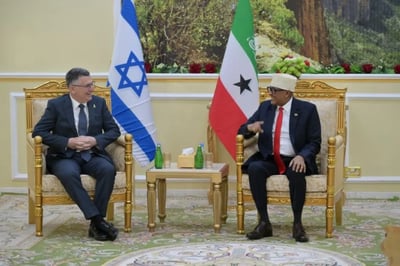
The politics of international borders and diplomatic recognition carry profound consequences for millions of ordinary people trying to live peaceful lives. Across troubled corners of the world, communities often struggle for decades to secure a stable identity, build local schools, and create safe neighborhoods for their children. In the strategic region known as the Horn of Africa, long-standing disputes over land, sovereign authority, and diplomatic legitimacy have once again burst into open international focus. The government of Israel has taken decisive steps to expand its diplomatic footprint by advancing plans to open an official embassy in the breakaway territory of Somaliland, setting off sharp diplomatic ripples across global capitals.
This diplomatic move goes directly against explicit cautions and formal warnings issued by several influential world and regional powers. Major global players including China, Saudi Arabia, and Turkey have publicly registered their deep disapproval of any unilateral actions that could upset delicate regional balances. These governments emphasize that recognizing or engaging formally with separate regions without the express agreement of the recognized central administration sets a dangerous international precedent. For people living across the Horn of Africa and the Red Sea corridor, escalating political friction threatens to disrupt maritime trade routes, cross-border commerce, and regional security cooperation.
The central government of Somalia, supported firmly by international partners including the United States, has delivered a fierce and immediate response. Officials in the Somali capital of Mogadishu issued direct statements reiterating that Somaliland remains an inseparable and lawful part of sovereign Somali territory. Somali leaders stressed that any foreign state attempting to open official diplomatic missions or sign sovereign treaties with local authorities in the northern territory is violating international law and committing an unacceptable attack on national sovereignty. The central administration made it clear that preserving territorial integrity is non-negotiable for the country and its citizens.
To understand why this issue stirs such deep emotions, it helps to look at the history of the region. Somaliland declared its separation from the rest of Somalia several decades ago, back in 1991, following years of internal conflict and political upheaval. Since that declaration, the self-governing northern administration has maintained its own functioning police force, printed its own local currency, issued separate travel passports, and held regular local elections. Despite running these internal government functions in relative domestic peace, the global community, through the United Nations and the African Union, has consistently refused to grant it formal legal recognition as an independent sovereign nation, maintaining that dialogue with Mogadishu must come first.
For Israel, developing strong ties along the southern entrance of the Red Sea serves clear strategic and security objectives. Commercial cargo vessels and international energy shipments pass daily through these narrow maritime waters, making stability along the coast critical for maritime trade. By building direct official ties and establishing a physical embassy presence in Somaliland, Israeli authorities seek to strengthen their maritime observation, build intelligence coordination, and counter the influence of regional adversaries who operate across neighboring maritime corridors.
However, this push has encountered sharp resistance from prominent regional capitals. Turkey maintains extensive investments, infrastructure projects, and military training missions in Somalia, making it one of Mogadishu's closest and most reliable international partners. Turkish diplomats have warned that dividing Somalia further will create fresh security voids that armed extremist groups could easily exploit. Similarly, Saudi Arabia, which views the Red Sea basin as essential to its own national security and economic transformation projects, insists that stability can only be preserved by honoring official national boundaries and preventing regional fragmentation.
China has also voiced strong opposition to the unilateral diplomatic moves. Beijing maintains a strict foreign policy principle that rejects any international moves that encourage territorial separation or bypass recognized national governments. Because China places supreme value on national sovereignty and territorial unity in its own global engagements, it views external diplomatic overtures toward breakaway territories as deeply destabilizing to the established rules of the United Nations. Chinese foreign officials have consistently urged external powers to avoid actions that aggravate tensions among African nations.
For everyday citizens across the Horn of Africa, these high-stakes geopolitical arguments are not abstract legal debates. Ordinary families in market towns, port cities, and pastoral villages worry that rising diplomatic conflicts could disrupt basic cross-border trade, travel routes, and food supply chains. When powerful nations compete for influence over ports and coastlines, local populations often bear the heaviest burden of political instability and economic uncertainty. Community elders and civic groups have voiced their desire for lasting reconciliation, urging political leaders to prioritize humanitarian welfare and mutual dialogue over foreign geopolitical rivalries.
The unfolding dispute over the proposed embassy highlights the fragile balance between local aspirations and international diplomacy. While authorities in Somaliland view Israeli recognition as a long-awaited chance to break out of global isolation and attract foreign capital, the move directly challenges international agreements that protect sovereign borders across Africa. As international warnings mount and the central government in Somalia stands firm on its constitutional authority, the region faces a delicate test that will shape diplomatic alliances and peace across the Red Sea for years to come.