
Gaza Rains Flood Makeshift Camps As Displaced Palestinians Plead For Mobile Homes And Warm Shelter
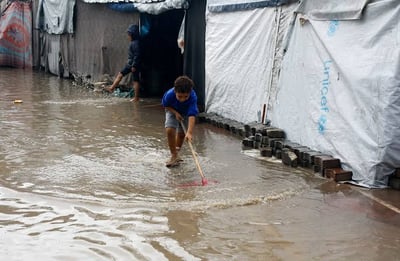
Cold winter rains and fierce winds have turned displacement camps across the Gaza Strip into muddy disaster zones, pushing hundreds of thousands of exhausted families deeper into misery. For over a year, displaced parents and children have lived inside flimsy shelters made of worn fabric, thin plastic sheets, and scrap wood. When dark storm clouds broke open across the coastal strip, the thin roofs could not hold back the downpour. Within minutes, freezing rainwater poured straight through fabric tears, soaking mattresses, drenching wool blankets, and ruining the small bags of flour and dry food that families had carefully saved. Mothers spent the entire night holding crying toddlers in their arms to keep them above the rising muddy water, while fathers used plastic bowls and broken kitchen pots in a desperate, losing battle to scoop the flood out of their tents.
The miserable conditions grew even more desperate in November 2026 as early winter storms swept through the Mediterranean coastline, hitting coastal camps with extreme force. Elderly residents described waking up in the middle of the night to discover that their floors had completely turned into pools of brown water. In camps across central and southern areas, families who had already fled their original houses multiple times found themselves standing in freezing mud with nowhere else to run. Jaber al-Kaseeh, an elderly grandfather in his seventies who lives in a crowded camp, explained that repeated flooding has left their living quarters torn and unusable. He noted that instead of sleeping, neighbors spent the dark hours calling out to one another in the wind, checking whether nearby tents had collapsed and ensuring that young infants were still breathing safely.
The physical toll on human health is mounting rapidly as the damp cold sets in. Doctors and humanitarian workers in nearby clinic tents reported a sharp surge in chest infections, severe coughing, hypothermia, and skin illnesses among young children. Because clean tap water and functioning sewage networks were destroyed during the war, the rainwater on the ground quickly mixed with overflowing waste from open trenches. Children walking barefoot through the camps have no choice but to step through contaminated sludge, exposing them to dangerous waterborne infections. Mothers have no dry firewood or cooking gas to warm their shivering babies, forcing many to burn scraps of wet plastic and old shoes just to create a tiny flame, which fills the crowded tents with toxic black smoke.
What makes this human suffering especially painful is that better shelters exist just a few kilometers away across the border. Humanitarian agencies have assembled thousands of insulated mobile homes, prefabricated living units, and weather resistant caravans to replace fragile cloth shelters. However, Israeli authorities continue to tightly restrict the entry of these housing units and basic building supplies through border gates, classifying metal frames, sturdy wooden poles, and mobile units as restricted items. As a result, long lines of trucks loaded with emergency caravans remain parked idle on the Egyptian side of the crossing, some waiting for months, while families inside Gaza face freezing storms inside crumbling tents.
Families who had hoped that past ceasefire talks would bring relief now describe feeling completely forgotten by the outside world. Om Hani Hamouda, a mother displaced multiple times from Beit Lahiya in northern Gaza, shared the heavy emotional burden of watching her children suffer in the mud. She explained that her family is not asking for luxury, but merely for basic human dignity and a dry space where they can sleep without rain dripping on their heads. She pointed out that even a basic caravan or a few waterproof tarpaulins would make an enormous difference in protecting young lives. Like many others, she had hoped promised temporary housing units would arrive before winter, but said the relief had remained only empty words while their daily struggle grew harder.
Other displaced fathers echoed the same deep frustration over the lack of proper shelter. Jihad Dawwas, who was forced from his home in northern Gaza, stated plainly that a worn cloth tent cannot replace a proper home even by a small fraction. He noted that his family feels abandoned as promised aid distributions fail to reach those who need it most. Dawwas questioned why simple emergency supplies like tarpaulins, waterproof sheeting, and tent repair kits have become so difficult to get inside the territory, noting that displaced people have to fight for the barest necessities of survival while winter weather threatens to wash away everything they have left.
International aid groups and human rights organizations have renewed their urgent appeals to world leaders, warning that another winter without proper shelter will cost many innocent lives. United Nations relief teams stressed that emergency shelter kits waiting outside the border gates must be allowed into Gaza immediately, predictably, and without administrative hurdles. Aid coordinators emphasized that makeshift tarpaulins salvaged from old garbage cannot withstand seasonal rains and high coastal winds. Without insulated mobile units, waterproof ground covers, and dry blankets, vulnerable people, especially infants, pregnant women, and the elderly, face grave dangers from freezing temperatures.
The ongoing crisis shows the vast gap between international diplomatic promises and the brutal reality on the ground. Over one million people remain trapped in displacement camps, facing an unforgiving winter without walls, heating, or dry clothes. While global organizations issue reports and hold discussions in air conditioned conference rooms, mothers in Gaza stay awake all night holding plastic sheets over their sleeping babies. Allowing mobile homes and basic shelter materials to pass through the border crossings is not a political concession; it is an urgent humanitarian duty required to keep innocent human beings from freezing to death in the winter mud.