
Iran Supreme Leader Khamenei Funeral Procession Begins In Tehran As Millions Gather
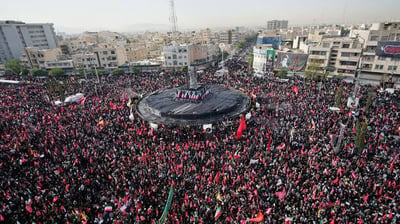
The capital city of Iran became a sea of black clothing on July 6, 2026, as millions of citizens gathered to witness the start of a massive funeral procession for their late Supreme Leader, Ayatollah Ali Khamenei. The 86 year old leader was killed on February 28, 2026, alongside 4 members of his immediate family during a highly controversial joint military strike by Israel and the United States. This sudden attack instantly ignited a intense 5 week war that shook the entire Middle East. For months, the bodies remained held while the nation navigated intense conflict, but now a massive 6 day national mourning period has officially commenced. On Monday morning at exactly 6 am local time, the flag draped coffins were brought out from the Grand Mosalla religious complex to begin a long 10 to 12 hour journey across Tehran toward Mehrabad International Airport. The public outpouring reflects a deep mix of genuine grief, nationalistic pride, and immense anger over a strike that targeted the heart of the country's political system.
The logistics of moving the funeral convoy along the 10 kilometer route required absolute precision from military planners. The coffins were placed on a large truck specifically modified to resemble the sacred ornamental grating of a traditional Islamic shrine. This vehicle slowly pushed through iconic locations including Damavand Street, Imam Hussein Square, Enqelab Square, and Azadi Square. To prevent a dangerous repeat of history, authorities installed massive concrete walls to separate the emotional crowds from the moving vehicle. Security commanders were visibly worried about a repeat of the 1989 funeral of the previous leader, Ruhollah Khomeini, where severe crowd surges resulted in more than 10 deaths and over 10000 injuries. Despite these heavy barriers, the sheer volume of people brought the convoy to a total standstill near Azadi Square multiple times. Mourners carried large portraits of the late leader, beat their chests in traditional patterns, and even hung a mock figure of United States President Donald Trump to show their deep frustration.
While state television broadcasted non stop images of a completely unified population, a closer look at the event reveals several hidden political anxieties and internal divisions within the government. Ali Khamenei had ruled the nation with total control for 36 years, and his sudden removal left a giant leadership vacuum. His son, Mojtaba Khamenei, was quickly named as the new Supreme Leader just 1 week after the February strike occurred. However, Mojtaba has not made a single public appearance since taking power, and he completely skipped this massive public procession due to major security warnings from intelligence agencies. Although 3 of his brothers stood openly near the caskets on Sunday, the new leader's total invisibility creates an unsettling air of mystery regarding who is actually running daily operations. Additionally, independent observers noticed that not a single surviving past Iranian president attended the public ceremonies, highlighting the deep political friction that continues to exist behind closed doors despite the official media show of total harmony.
The international community is watching these events very closely as the country tries to project power and resilience during a time of extreme vulnerability. High ranking officials and foreign diplomats from nations like Russia, China, India, and Pakistan arrived in the capital to show their support, ignoring intense diplomatic pressure from Western governments who wanted a total global boycott. This shows that despite being heavily battered by weeks of military actions, the government still holds onto its most important global alliances. The long journey through the capital is only the opening phase of a marathon schedule. On Tuesday, the body will move to the clerical city of Qom before traveling across the border into Iraq on Wednesday to visit the holy cities of Najaf and Karbala. The final burial is set for Thursday, July 9, 2026, at the Imam Reza shrine in Mashhad. While the government successfully used this historic gathering to show its survival to the world, the real challenges will emerge next week when frozen negotiations regarding international trade, nuclear restrictions, and shipping fees in the Strait of Hormuz must finally be answered.