
Russia Unleashes 496 Drones and 74 Missiles on Kyiv in the Most Severe Attack of the Year
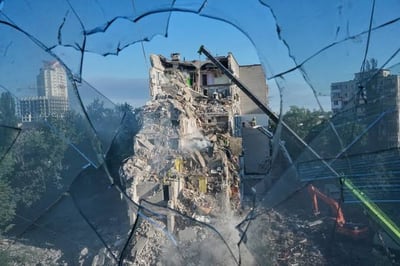
The capital city of Kyiv experienced its most devastating night of the calendar year when Russian forces unleashed a massive and coordinated aerial bombardment that overwhelmed local defenses. In the early hours of July 2, 2026, the silence of the night was shattered by consecutive explosions that vibrated through the central districts, prompting thousands of terrified citizens to flee their beds and seek protection inside deep underground metro stations and reinforced bomb shelters. Official reports released by the Ukrainian air force revealed that the scale of the offensive was historically large, involving the launch of 496 drones and 74 missiles within 1 night cycle. The local emergency services later confirmed that the heavy bombardment resulted in the tragic deaths of at least 30 individuals, while an additional 91 people sustained various degrees of physical injuries. The kinetic impact of the weapons caused severe structural damage to approximately 130 buildings scattered across the capital city of 3000000 residents. 1 of the most severely impacted areas was located on the eastern bank of the Dnipro River, where a high velocity missile tore directly through a 9 story residential structure, instantly pulverizing 64 separate apartments and leaving family members trapped beneath large concrete slabs. The sheer magnitude of this destruction prompted the city mayor to officially designate the following Friday as 1 formal day of public mourning to honor the lives cut short by the violence.
The strategic objective behind this massive operation became clearer as detailed reports emerged regarding the specific locations targeted by the incoming waves of hardware. A public statement published on a prominent social media channel by the defense ministry in Moscow explicitly stated that its long range high precision weapons had successfully hit their designated marks, which included critical military installations, essential energy production facilities, and major operational airports around the capital region. The physical consequences of these impacts were felt immediately across the metropolitan area as multiple fires erupted, gutting key institutional structures such as the National Institute of Biochemistry, where a state of the art laboratory facility was completely ruined. Additionally, a massive humanitarian supply warehouse managed by the Ukrainian Red Cross was entirely reduced to ashes, resulting in the immediate loss of 320000 relief items that were meant to aid vulnerable populations across the country. The severe damage inflicted upon the primary energy nodes caused immediate disruptions to the electrical grid, plunging numerous neighborhoods into total darkness and cutting off access to water supplies for thousands of families. Aviation spokespersons noted that the attacking forces utilized an exceptionally high concentration of advanced ballistic missiles during this specific raid, which traveled at speeds that made tracking and neutralisation efforts incredibly complex for the ground teams.
Analyzing the broader implications of this escalation reveals a calculating shift in the tactical behavior of both participating nations as they increasingly focus on striking high value infrastructure deep inside enemy borders. The Russian authorities framed this specific aerial campaign as a direct act of retaliation following a series of successful long range drone operations conducted by Ukraine against domestic fuel distribution networks, including a recent strike that ignited an oil refinery in the Nizhny Novgorod region. This ongoing cycle of infrastructure targeting demonstrates how the control over energy resources has transformed into a dominant factor in the overall conflict, with each side attempting to inflict maximum economic paralysis on the other. The fact that local forces experienced a low interception rate during this latest raid exposes a dangerous gap in the protective network of the capital, primarily driven by critical shortages of specialized Patriot interceptor missiles. This defensive deficit highlights the problematic reality that without a continuous and rapid supply of advanced munitions from international partners, the city remains highly vulnerable to sophisticated saturation tactics that combine slow moving drones with high speed ballistic assets to exhaust ground based defenses.
The political fallout from the devastating strike materialized quickly on the international stage as leadership figures reacted to the high casualty count and widespread physical ruin. President Volodymyr Zelenskyy immediately altered his travel plans, cutting short an official diplomatic visit to Ireland to return to the capital and survey the smoldering ruins of the residential districts firsthand. The visible destruction prompted the leader to deliver a pointed message to global allies, openly critiquing the delayed delivery of promised air defense assets and arguing that quicker logistical support could have preserved many civilian lives. Globally, the United Nations leadership denounced the pattern of attacks on densely populated urban zones, while officials within the European Union announced plans to introduce a fresh round of economic sanctions designed to restrict the military industrial capacity of the attacking nation. The overall evaluation of the incident shows that despite years of conflict experience and structural reinforcement, the capital remains susceptible to catastrophic damage when subjected to highly concentrated aerial pressure. As emergency response teams continue their continuous operations to clear away tons of debris and locate missing persons, the tragic event underscores the deep human cost and the unresolved strategic deadlock that defines the current state of the theater.