
Trump Declares Iran Ceasefire Over but Agrees to Continue Talks Following New Military Strikes
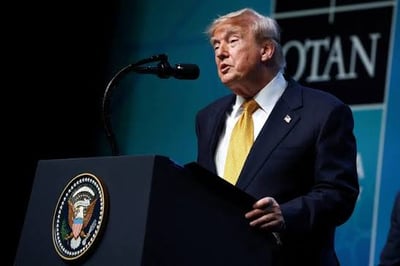
The fragile peace in the Middle East shattered completely after United States President Donald Trump officially announced that the temporary ceasefire agreement with Iran stands terminated. Taking to his social media platform Truth Social on July 10 2026 Trump declared that while Washington has agreed to continue diplomatic discussions following a direct request from Tehran the United States has made it clear in no uncertain terms that the truce is dead. This critical announcement follows a week of intense military operations where the long-time foes exchanged direct bombardments breaking the short-lived memorandum of understanding signed last month by Trump and Iranian President Masoud Pezeshkian. As regional mediators from Qatar and Pakistan scramble to prevent a return to full-scale war an uneasy calm has settled over the Persian Gulf region while both global powers remain locked in a dangerous deadlock.
The sudden collapse of the peace framework began earlier in the week when the United States blamed Iran for launching aggressive attacks on 3 commercial oil tankers transiting the strategic Strait of Hormuz. In swift retaliation the US Central Command ordered massive airstrikes pounding around 90 Iranian military targets across 6 major cities which resulted in 17 fatalities and 115 injuries according to data from Iran Health Ministry. Tehran refused to back down and immediately launched a barrage of ballistic missiles and drones targeting vital US military installations across Kuwait Bahrain Jordan and Qatar. The Islamic Revolutionary Guard Corps targeted a US Army fuel depot in Bahrain and fired 10 ballistic missiles at Jordan Azraq military base which heavily escalates the direct confrontation between the world most powerful military and the heavily armed Islamic Republic.
This rapid descent back into open warfare exposes the fatal flaws of a loosely written diplomatic agreement that failed to address core geopolitical realities. The original memorandum of understanding was rushed through to allow political victories on the global stage but it left critical terms regarding the navigation rights in the Strait of Hormuz dangerously vague. Iran has leveraged its geographic position to claim total control over this narrow waterway which carries 20 percent of the global oil supply and has even attempted to levy maritime transit fees on passing vessels. By using aggressive tactics to disrupt international energy routes Tehran is trying to maximize its leverage against heavy economic sanctions while domestic hardliners under the new Supreme Leader Mojtaba Khamenei push for absolute resistance against Western pressure.
To prevent an absolute economic and military catastrophe the global community must look beyond aggressive social media rhetoric and establish definitive maritime boundaries. Trump remains eager to avoid a prolonged costly regional war ahead of the upcoming November congressional elections yet his administration cannot allow Iran to weaponize a vital global trade chokepoint that sends crude oil prices soaring for everyday consumers. While Iran Foreign Ministry spokesperson Esmaeil Baghaei publicly denied ever requesting new negotiations with Washington the presence of Qatari envoys in Tehran proves that back-channel diplomacy is still functional. True long-term stability can only be achieved if future technical talks establish clear explicit rules for international shipping lanes and strip away the vague political compromises that doomed this brief truce from its very inception.